Inside Halsanefshellir, the sea cave behind the columns at Reynisfjara
What the Halsanefshellir sea cave at Reynisfjara is really like inside: the basalt ceiling, the rockfall and tide risks, when access closes, and how to photograph it without turning your back on the sea.
 By Björn Einarsson, Iceland South Coast tour guide and local specialist
Access update, checked 25 September 2026: SafeTravel currently restricts Reynisfjara visits to the designated viewpoint. The descriptions below include features that may be inaccessible; follow current closures and on-site instructions.
Tucked into the cliff just past the Gardar columns, half the people on Reynisfjara never notice it. The Halsanefshellir cave does not announce itself. You round the base of the column wall, the beach narrows toward the headland, and there it is: a dark mouth in the rock with the same hexagonal geometry running across its ceiling.
Planning Reynisfjara as part of a wider South Coast day? The small-group trip handles the Reykjavik drive and includes a beach stop alongside two waterfalls. Explore the Reynisfjara day route
For transport to Reynisfjara, compare the 10-hour small-group South Coast trip and its beach stop with your plans. See the Reynisfjara transport option
I have stood inside it on a calm day and I have stood outside it on a day the guide would not let anyone near. Both are worth describing, because the difference between them is the whole point of this post.
What is the Halsanefshellir cave like inside?
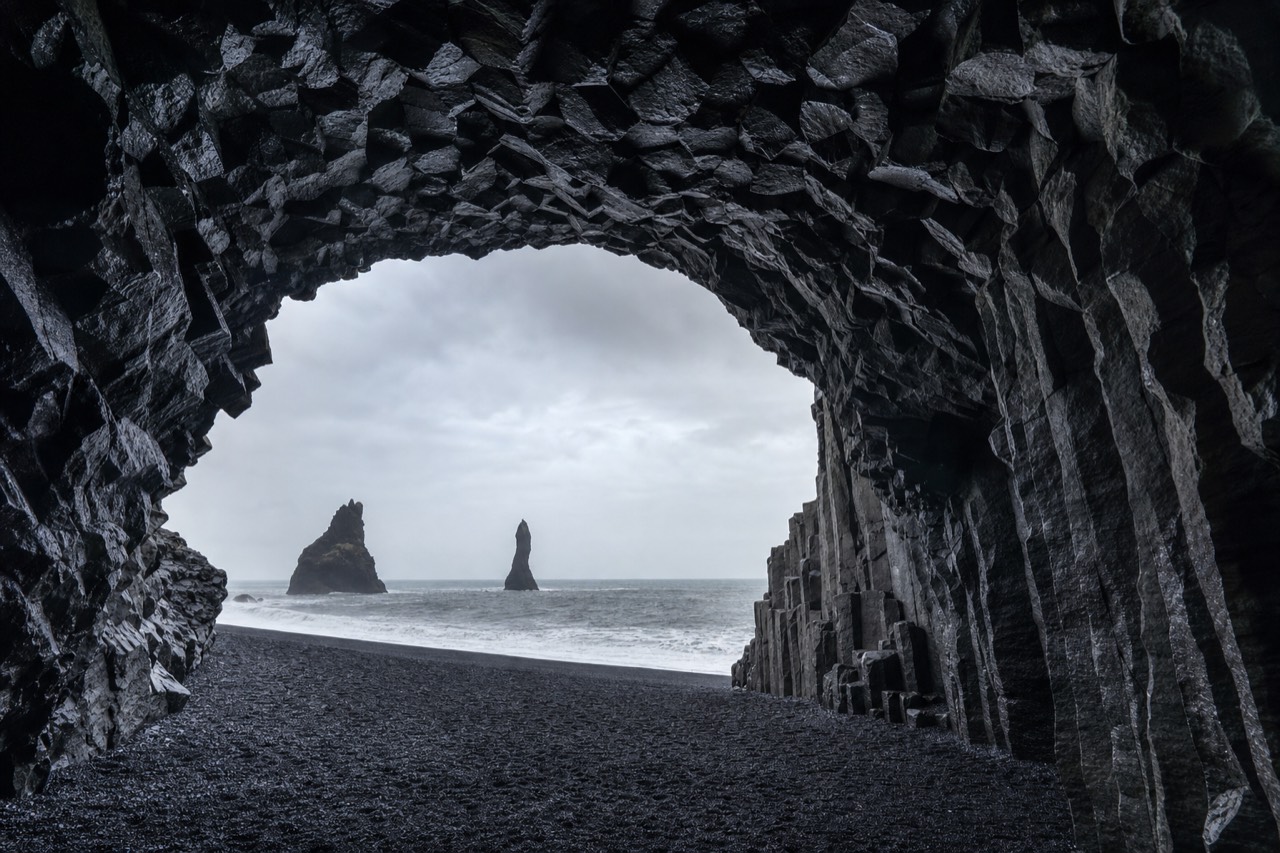
It is a shallow, cathedral-cold recess in the cliff with a ceiling of fractured hexagonal basalt overhead and a floor of slick black boulders.
The cave is not deep. It is a shallow sea-carved recess in the cliff, not a tunnel, so you are never far from daylight. What makes it special is the ceiling. The same columnar basalt that forms the outside wall runs overhead in fractured hexagons, so you are standing under the broken ends of the columns looking up into that honeycomb. On a bright day the light bounces off the wet black rock and the whole space has a cold, cathedral quality.
The floor is a jumble of rounded boulders and coarse black stone, slick where the sea reaches. Sound changes in there. The rattle of the beach pebbles gets swallowed and you hear the drips and the boom of surf against the outer rock instead. People drop their voices without meaning to.
It is a genuinely striking spot for ten minutes. It is not a place to linger, and the reasons matter.
Why does access to the cave change and close?
Two hazards govern it: the cliff sheds loose rock from above, and the tide with its sneaker waves can cut off or flood the approach below.
Two things govern whether you should be at the cave at all: the rock above you and the water below.
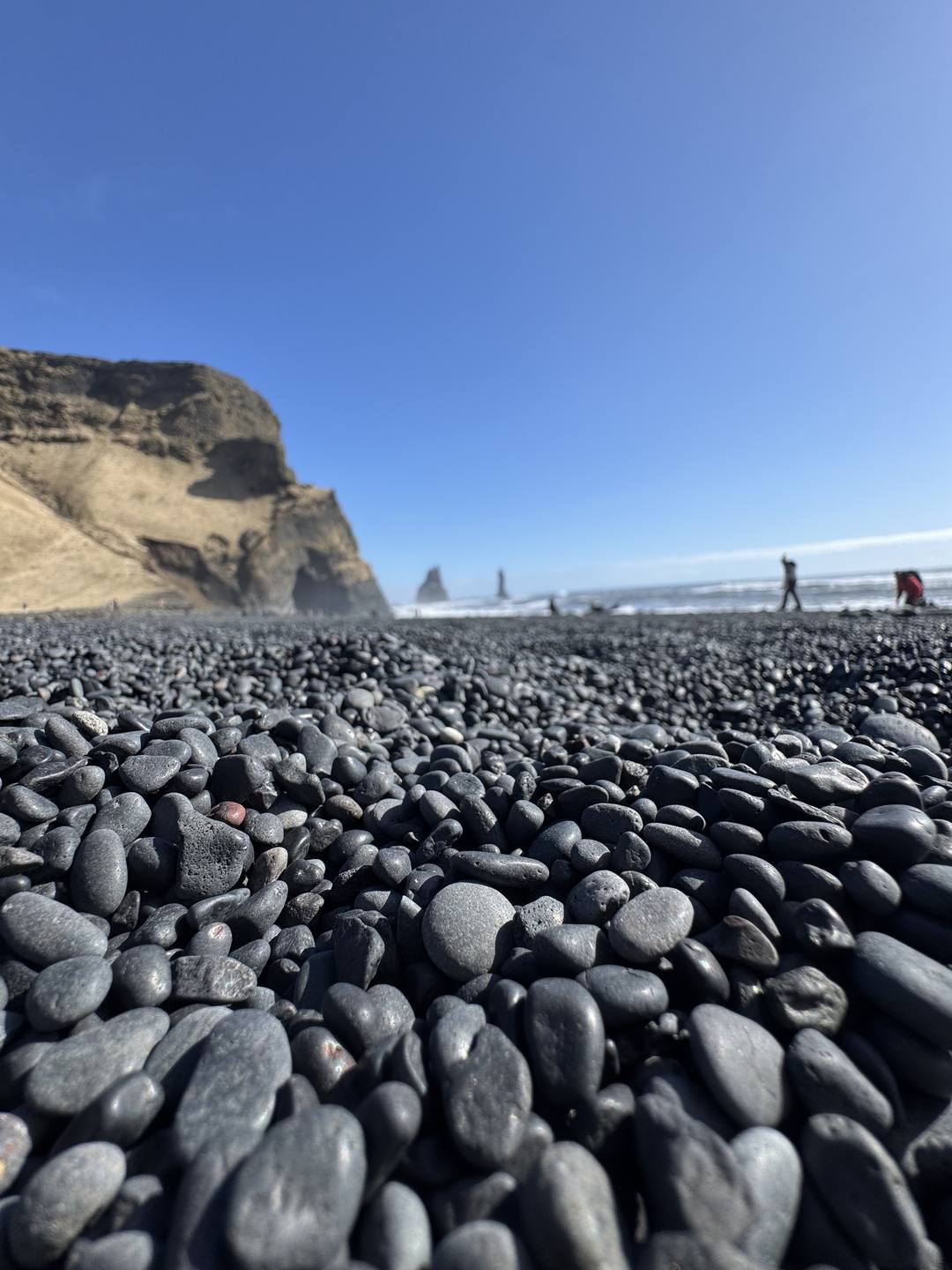
The cliff here sheds rock. This is loose, weathered, fractured basalt, and pieces come down. The February 2026 slope collapse further along the beach was a reminder of how active this coast is. Guides watch the cliff face and will keep groups back if conditions look unstable, and sometimes the cave area is roped or signed off entirely. That is not bureaucracy. It is a response to real falls.
The tide is the other clock. Reynisfjara has no gentle shelving shore. The water comes up the beach hard and, with a sneaker wave, unpredictably far. At higher water the approach to the cave narrows, and getting cut off or caught by a surge in a place with boulders underfoot is exactly the scenario that hurts people here. The cave is close to the water line the sea claims.
What are the do's and don'ts at the cave?
Do not approach the cave while access is restricted. Low water is not permission to enter; follow closures and never turn your back on the sea.
| Do | Don't |
|---|---|
| Check the cliff and the sea state before you approach | Approach if it is roped, signed off, or your guide says no |
| Obey current access restrictions; low water does not make entry safe | Linger inside waiting for the perfect light |
| Keep one eye on the surf line the whole time | Turn your back on the sea to frame a photo |
| Watch your footing on wet boulders | Climb the walls or the column ends inside |
| Move as a group and keep children close | Let anyone wander toward the water for a closer shot |
| Accept that "closed today" happens and is right | Duck a barrier because other people did |
None of this is meant to scare you off. It is meant to keep the visit a good memory. Low water or a calm-looking sea does not establish safe cave access. Follow the current restrictions and watch for falling-rock hazards.
How do you photograph the cave safely?
Do not enter or approach the cave for photographs while the area is closed. Use the designated viewpoint and never back toward the water.
The ceiling is the distinctive photographic subject: the hexagons, cave mouth and daylight create contrast. Such interior compositions are not an option while the area is closed. Wet rock is dark, so you will need a steady hand or a fast lens; phones cope better than they used to but still struggle in that dim, high-contrast space.
The mistake I see constantly is people backing toward the sea to fit the whole cave mouth in. That is the one move Reynisfjara punishes. Do not enter restricted areas to recreate an interior photograph, and never turn your back to the water. No photo is worth the walk down that beach that some visitors have not walked back from.
How do you reach the cave without driving?
A guided South Coast day trip from Reykjavik can provide transport to Reynisfjara. It does not guarantee access to Halsanefshellir; current closures apply.
The cave is at the western end of Reynisfjara, a few minutes' walk past the columns, and the beach is about 180 km and two and a half hours from Reykjavik on Route 1. If you are already committed to a South Coast day and would rather not manage the driving and the timing, the guided day trip from Reykjavik includes a stop at Reynisfjara on a broader South Coast sightseeing route.
What is the short version?
Halsanefshellir is a shallow sea cave with a striking hexagonal ceiling, subject to wave, rockfall and access restrictions; the area is currently closed to approach.
Halsanefshellir is a shallow sea cave in the cliff just past the Gardar columns at Reynisfjara, with a striking hexagonal basalt ceiling. The cliff sheds rock and sneaker waves are unpredictable. Current access is restricted to the viewpoint; do not approach the cave or cross closures for a photo.
Choose Your Visit
Initial editorial recommendation. Check pickup and all operator requirements before booking.
Compare Options And Adjust Your Plan
- Iceland's South Coast Full Day Small-Group Tour from Reykjavik: Visit the South Coast waterfalls and the Reynisfjara area in a group of up to 18. 10 hours. Departs from and returns to Reykjavík. Follow current closures: sand, columns and cave access are not guaranteed. Confirm your pickup point.
- South Coast Day Tour Black Sand Beach & Waterfalls from Reykjavik: Combine the South Coast waterfalls and the Reynisfjara area on a shared coach itinerary. 10 hours. Departs from and returns to Reykjavík. Follow current closures: sand, columns and cave access are not guaranteed. Confirm your pickup point.
Iceland's South Coast Full Day Small-Group Tour from Reykjavik
Set your South Coast date before arranging separate transport. Check the Reykjavik small-group day with a Reynisfjara beach stop.
10 hours. Departs from and returns to Reykjavík. Guide; Minibus transport; Reykjavík pickup. Meals and drinks cost extra.
Follow current closures: sand, columns and cave access are not guaranteed. Confirm your pickup point.
Choose your date on Viator while the schedule loads.
Scheduled departures only. Availability and final price are confirmed on Viator.