Watching puffins and seabirds at Dyrholaey
When and where to find puffins at Dyrholaey near Reynisfjara, plus the seabirds and seals you will spot along the way, how to watch them without doing harm, and why binoculars change the whole day.
 By Björn Einarsson, Iceland South Coast tour guide and local specialist
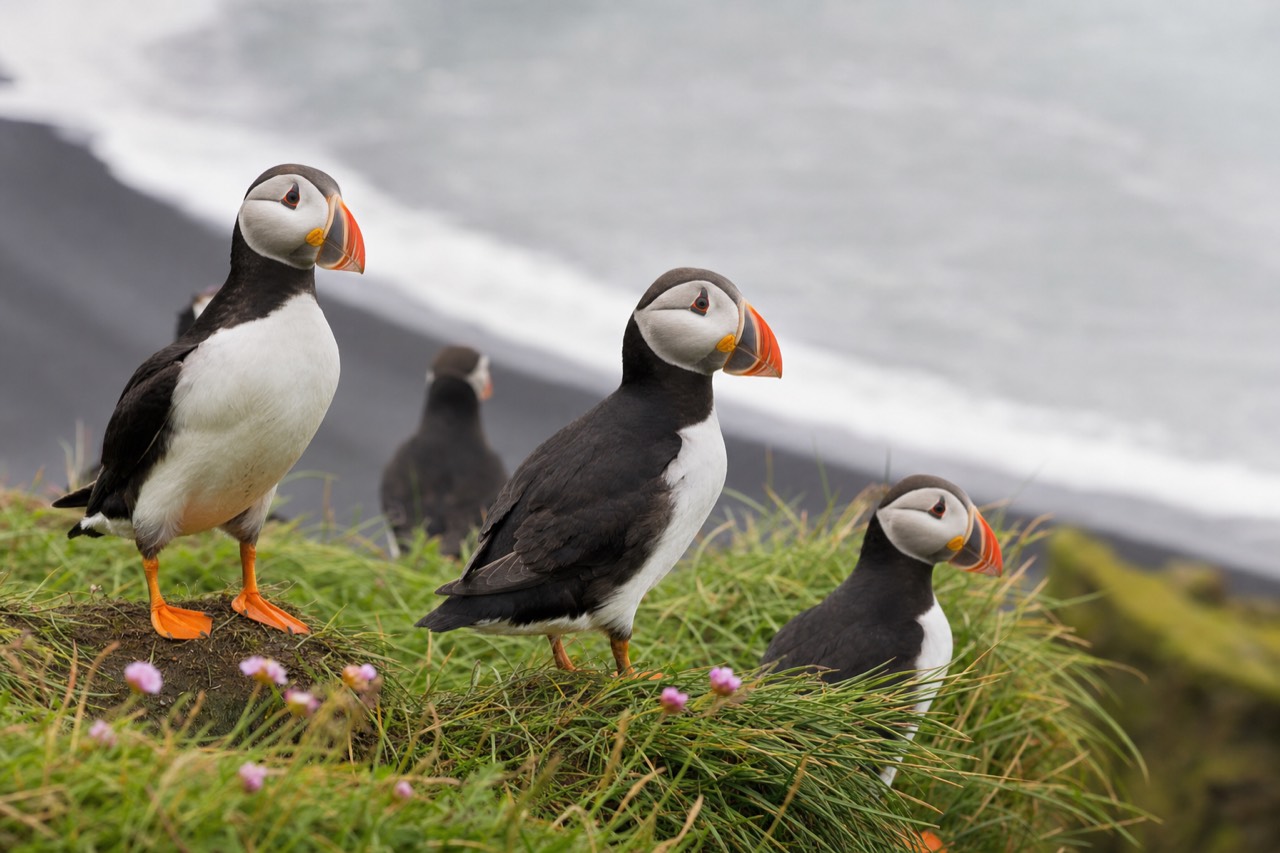
Access changes with conditions. Follow current signs and closures; beach tours do not guarantee access to the sand, basalt columns or sea cave.
The first puffin most people see is smaller than they expect. On a postcard they look chunky and comic; in life they are neat little things, quick on the wing, and they come at you low over the cliff edge before you have your camera up. Dyrholaey, the headland just west of Reynisfjara, is one of the more reliable places on the South Coast to see them, and the walk up is worth it even on a birdless day for the view alone.
Want Dyrholaey included in your coast day? Explore the private Reykjavík route that explicitly visits the headland, waterfalls and Vík shoreline. Explore the private Dyrholaey route
Allow about 8 hours for the private coast itinerary; nesting closures and wildlife activity determine the viewing opportunities. See the Dyrholaey itinerary
I take visitors here whenever the calendar lines up. The trouble is the calendar has firm opinions.
When are the puffins actually at Dyrholaey?
They nest here from roughly May into August, and they are gone the rest of the year. Puffins nest at Dyrholaey roughly from May into August. Outside that window they are out at sea, spending the whole winter on open water, and no amount of hoping will conjure one onto the cliffs. Even inside the season they are not standing around on command. Mornings and evenings tend to be more active than the middle of the day, and weather shifts everything. A calm bright evening in late June is about as good as your odds get.
There is a catch worth knowing. Parts of Dyrholaey close during the earliest nesting weeks to protect the birds, so the access you read about in one blog might not be open when you turn up. Check before you drive out.
What else lives on these cliffs besides puffins?
Fulmars, kittiwakes, guillemots and razorbills work the rock faces, and harbour seals turn up on the black beaches below. Puffins get the posters, but they share the cliffs. You will likely see fulmars gliding stiff-winged along the rock faces, kittiwakes wheeling and calling, and if you are lucky the black-and-white flash of guillemots or razorbills packed onto the ledges. Down on the black beaches below, seals sometimes haul out or bob in the surf, watching you as much as you watch them.
Here is a rough guide to what shows up and when.
| Species | Best season | Where to look | Note |
|---|---|---|---|
| Atlantic puffin | May to August | Grassy cliff tops at Dyrholaey | Most active morning and evening |
| Fulmar | Spring to late summer | Gliding along the cliff faces | Nests on ledges, defends fiercely |
| Kittiwake | Spring to summer | Noisy colonies on the rock | Listen for the "kitti-wake" call |
| Guillemot / razorbill | Late spring to summer | Packed onto sea-cliff ledges | Often in dense groups |
| Harbour seal | Year round, calmer in summer | Black beaches below, in the surf | Keep your distance, do not approach |
How do I watch the birds without harming them?
Stay on the marked paths, keep well back from the cliff edge, and never chase a bird for a shot. The birds are nesting. That is the whole point of the season, and it means the ground near the cliff edge may hold burrows and eggs you cannot see. Stay on the marked paths, keep back from the very edge, and never chase a bird for a photo. If a fulmar starts up at you, back off; it can spit a foul oil that ruins a jacket and, worse, its own feathers if it wastes it on you.
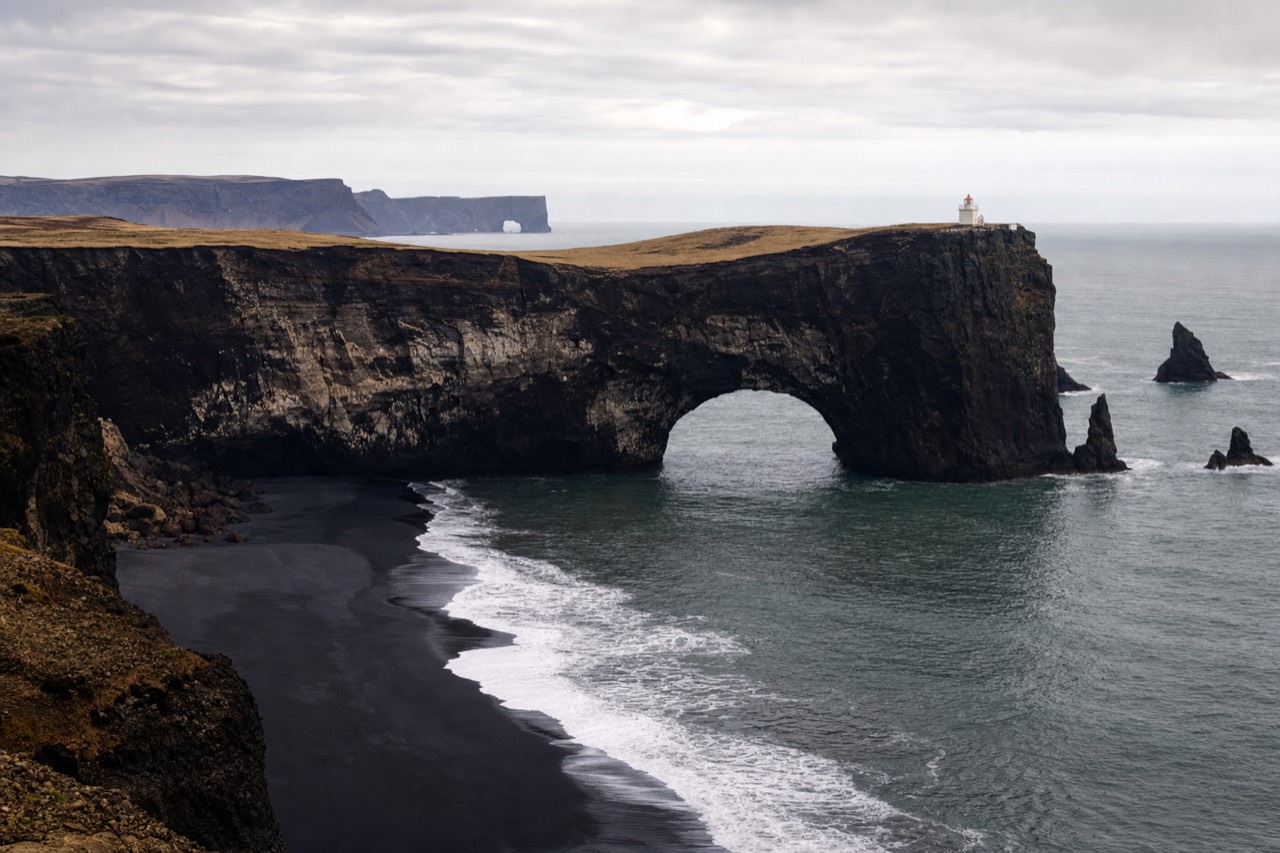
Dogs, drones, and loud groups all push nesting birds off, so leave the drone in the bag and keep it calm. The unglamorous truth of good wildlife watching is that it looks a lot like sitting still and paying attention.
Do I really need binoculars?
Yes, a cheap pair will do more for your day here than an expensive camera. If you take one piece of advice from a guide, take this: a cheap pair of binoculars will transform Dyrholaey more than an expensive camera will. The birds are often further out or lower down than they look, and a phone photo turns them into specks. Through 8x binoculars a puffin becomes a puffin, orange feet and painted beak and all. A long camera lens does similar work if you have one, but glass to your eyes beats a screen every time out here.
The wind is the other thing to plan for. This headland sticks out into the Atlantic and the gusts up top are no joke, so a proper layer and a hat you will not lose matter as much as the optics.
How does Dyrholaey fit into a South Coast day?
It sits right beside Reynisfjara, so it slots into the same day when the seasonal closures are lifted. Dyrholaey sits right next to the Reynisfjara run, so it slots naturally into a South Coast day if you have your own transport and the closures are lifted. For a guided visit, choose an itinerary that explicitly includes Dyrholaey; a Reynisfjara stop alone does not establish a visit to the headland.
Manage your expectations and you will not be disappointed. Some evenings the cliffs are alive with puffins; some middays there is barely a bird in sight. Come in season, come early or late, bring the binoculars, and let the coast decide how generous it feels. Even on the quiet days, the view from Dyrholaey is one of the finest on the whole South Coast.
Choose Your Visit
Initial editorial recommendation. Check pickup and all operator requirements before booking.
Compare Options And Adjust Your Plan
- South Iceland Tour of Waterfalls, Black Sand Beaches & Dyrholaey: Visit Dyrhólaey and Víkurfjara with private transport from Reykjavík. 8 hours. Reykjavík accommodation/harbor pickup and return Nesting and access closures apply. Puffin sightings are not guaranteed; no Reynisfjall hike or Yoda cave visit.
- Private South Coast Private Day Tour: Plan a private South Coast day including Dyrhólaey and Vík. 8 hours. Reykjavík pickup and return; verify exact location on chosen option. Summer puffins are possible, not guaranteed. Closures apply; confirm accessibility and child arrangements with the provider.
- South Coast Photography Private Day Tour: Explore South Coast scenery with a professional photography guide and private transport. 10 hours. Reykjavík hotel pickup and return; listed start 08:30. Bring your camera. The listed morning departure does not guarantee golden-hour or midnight-sun timing. Access restrictions apply.
South Iceland Tour of Waterfalls, Black Sand Beaches & Dyrholaey
Before arranging your coast day, check the private departure and pickup. Dyrholaey is explicitly on this 8-hour itinerary, subject to seasonal access.
8 hours. Reykjavík accommodation/harbor pickup and return Private guided transport; Reykjavík pickup and drop-off.
Nesting and access closures apply. Puffin sightings are not guaranteed; no Reynisfjall hike or Yoda cave visit.
Choose your date on Viator while the schedule loads.
Scheduled departures only. Availability and final price are confirmed on Viator.