The Reynisdrangar sea stacks and the trolls who were caught by the sun
The story behind Reynisfjara's black basalt sea stacks: the ~66m Reynisdrangar, the folk legend of two trolls turned to stone at dawn, and the named rocks locals still point out.
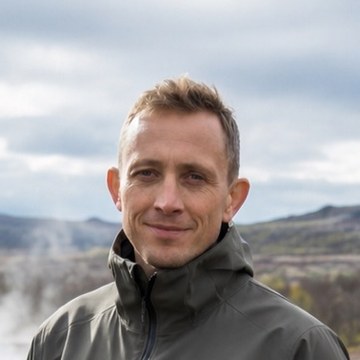 By Björn Einarsson, Iceland South Coast tour guide and local specialist
Access update, checked 25 September 2026: SafeTravel currently restricts Reynisfjara visits to the designated viewpoint. The descriptions below include features that may be inaccessible; follow current closures and on-site instructions.
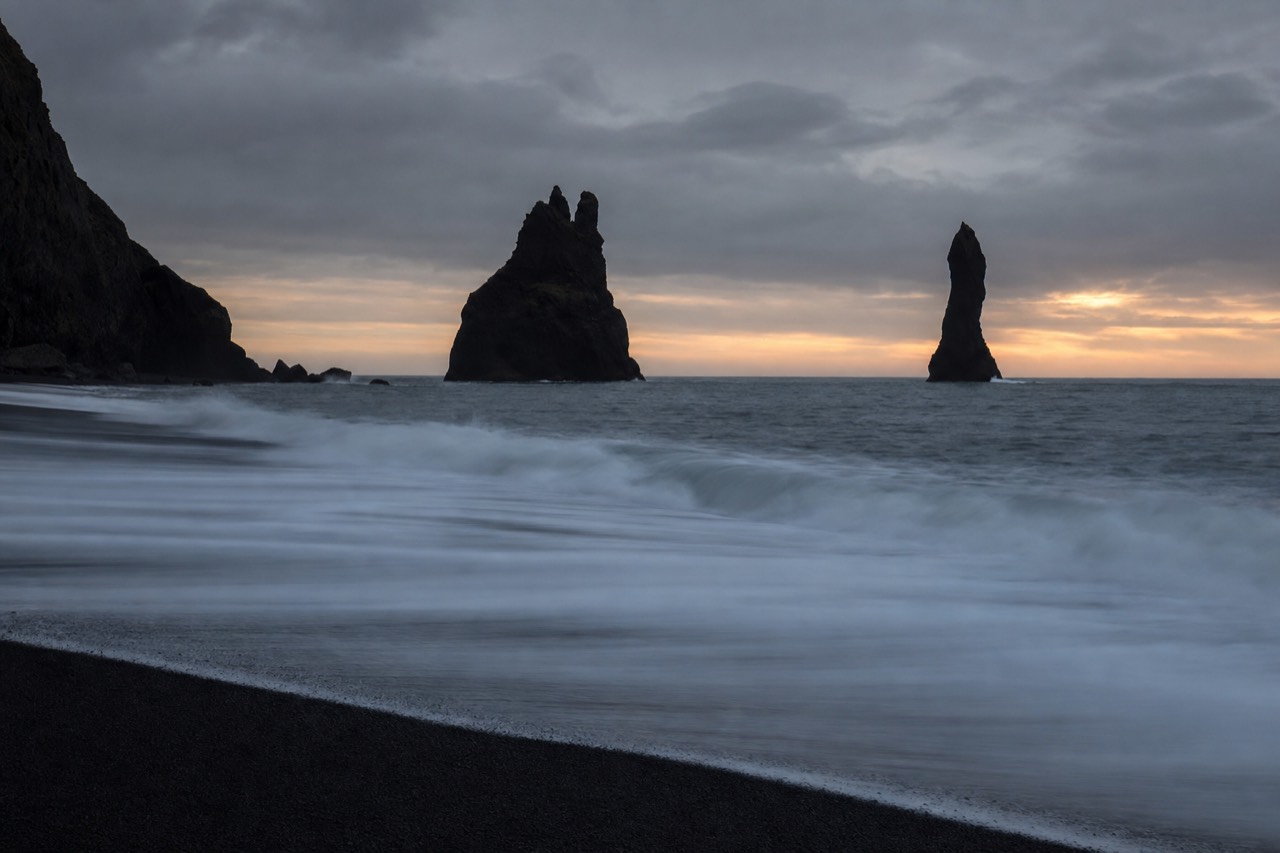
On a clear evening the Reynisdrangar look almost fake. Three or four black fingers of rock standing straight up out of a grey sea, catching the last light while the water around them goes dark. I have brought visitors down to this beach dozens of times, and the stacks are always the thing people go quiet for. Not the sand, not the cliff. The rocks out in the water.
Want to see the rocks behind the troll story? A Reykjavik small-group day trip stops at Reynisfjara as part of a South Coast waterfall-and-glacier route. Explore the sea-stack day trip
The small-group route includes a scheduled 30-minute Reynisfjara stop, plus Skogafoss, Seljalandsfoss and a glacier viewpoint. See the South Coast stops
They rise about 66 metres at the tallest point, which is taller than it looks from the shore because there is nothing next to them for scale. Just open ocean toward Antarctica. Geologically they are the leftovers of the same volcanic activity that built the whole Reynisfjall headland: basalt that the sea has been chewing at for a very long time, until only the hardest columns are left standing offshore.
What is the legend behind the Reynisdrangar sea stacks?
The old story says the stacks are two trolls and the three-masted ship they were dragging to shore, frozen to stone the moment sunrise caught them.
The story every Icelander grows up with is better than the geology, and I tell it every time. Two trolls, the tale goes, waded out into the night to drag a three-masted ship to land. Trolls in the old Icelandic sense are not cartoon creatures. They are huge, slow, night-bound things that turn to stone the instant sunlight touches them. That is the whole trap of the story.
The pair worked through the dark, hauling the ship toward the black shore. They were too slow. Dawn broke over the eastern cliffs before they reached safety, the first light hit them, and they froze where they stood. The trolls and the ship they were dragging are the rocks you see today, locked mid-effort in the surf. It is a story about being caught out by time, and anyone who has misjudged Iceland's daylight will feel the point of it.
There are softer variants too. In some tellings the stacks are the ship itself, in others they are three trolls rather than two. The version I like keeps it to the pair and the vessel, because it explains the shapes you actually see: tall figures and a longer, lower mass between them.
Do the individual sea stacks have names?
Yes, locals name the separate stacks, and Skessudrangur, Landdrangur and Langhamar all belong to the same troll story.
Locals do not treat these as one anonymous clump. Individual stacks and the nearby formations have names, and part of the fun of standing on the beach is having someone point them out.
| Feature | What it is | The story attached |
|---|---|---|
| Reynisdrangar | The main basalt sea stacks off Reynisfjara | The two trolls and the ship they were dragging, frozen at sunrise |
| Skessudrangur | One of the taller individual stacks | Sometimes named as the female troll of the pair |
| Landdrangur | A stack set closer toward the land | Read as part of the same night's work in local retellings |
| Langhamar | The lower, longer rock mass | Often taken as the ship's hull between the two figures |
| Dyrhólaey arch | The great sea arch just west along the coast | Separate landmark, but part of the same troll-and-sea folklore of the area |
I want to be honest that the exact naming shifts depending on who is telling it and which map you trust. That is normal for Icelandic place-lore. The rocks are real and their heights are real; the assignment of "this one is the female troll" is folk tradition, not a signpost, and I tell it as tradition.
When is the best time to photograph the Reynisdrangar?
Shoot them at low, side-on light and the black rock lifts clean off the sea; on a flat grey afternoon they vanish into it.
Everyone raises a phone at the Reynisdrangar and half of them come away disappointed. The problem is scale and light. On a flat grey afternoon the stacks blend into a flat grey sea and the photo looks like nothing. Come at the edges of the day, or when the sun is low and side-on, and the black rock separates from the water and the whole thing gains depth.
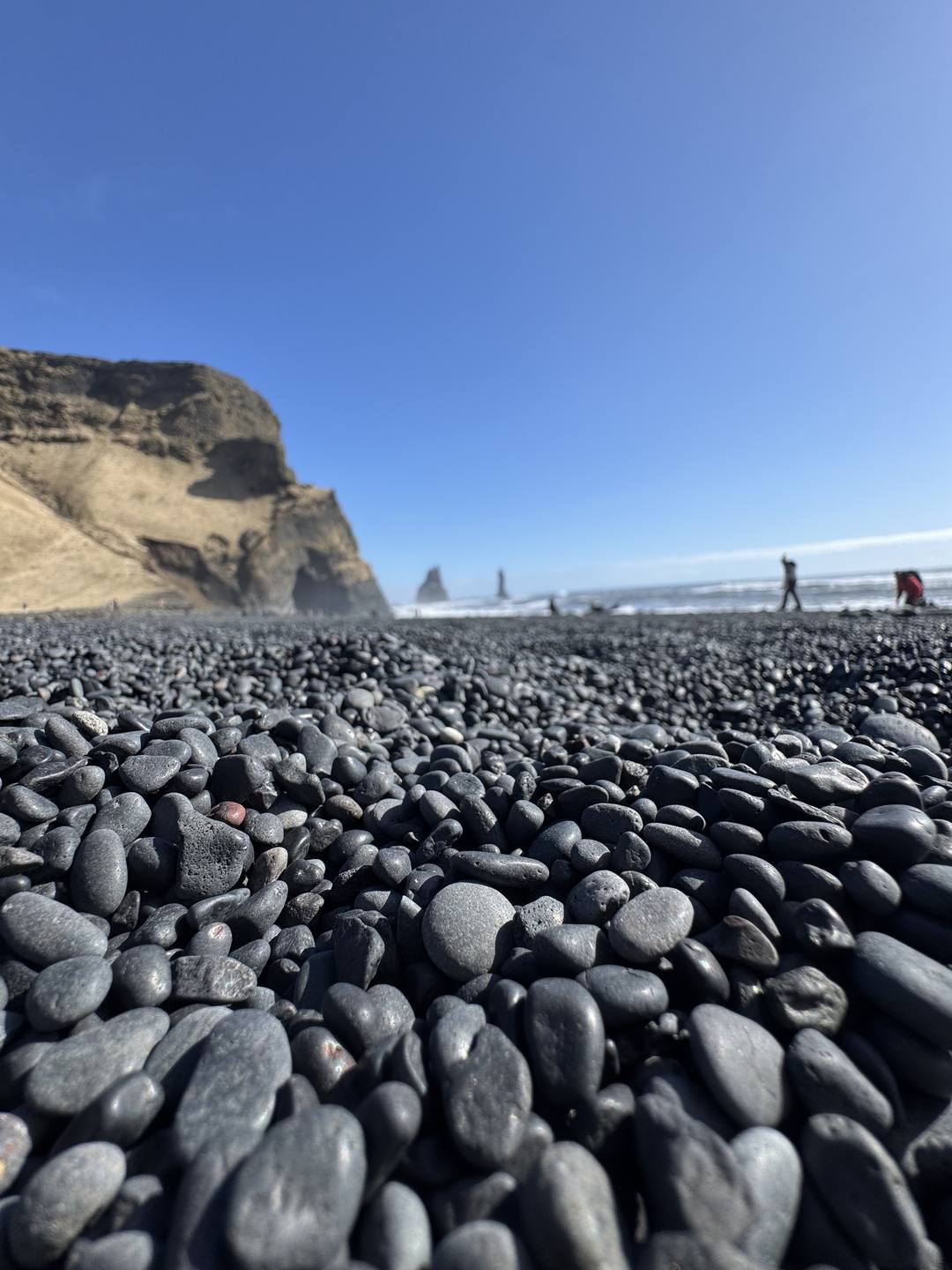
The best frame I know puts smooth black pebbles in the foreground, the surf line in the middle, and the stacks on the horizon. It gives the eye something near, something moving, and something far. If you only shoot the rocks alone, you lose the sense of how big and how far out they are.
One safety note that belongs right here, because the best photo angle tempts people toward the water. The stacks are offshore to the east, and getting a cleaner line on them pulls you down the beach toward the surf. That is exactly where Reynisfjara's sneaker waves are dangerous. Use the permitted viewpoint while beach access is restricted. The rocks are not going anywhere; they have stood since before there was anyone to name them.
How can you see the sea stacks without driving yourself?
Take the guided South Coast coach from Reykjavik, which includes a Reynisfjara stop, with visits limited to the areas currently open and no winter road to manage.
Reynisdrangar are one of those sights that reward being there over seeing them on a screen, and the beach they belong to is about 180 km from Reykjavik, roughly two and a half hours each way on Route 1. If you would rather watch the coast go by than manage that drive and the winter conditions on it, the guided South Coast day trip from Reykjavik includes a Reynisfjara stop, with visits limited to the areas currently open as part of a wider South Coast sightseeing day.
Watch the coast long enough and the story starts to make sense. The light really does change fast here. You can watch the stacks go from sharp to shadow in the time it takes to finish a coffee, and it is not hard to imagine two slow creatures losing their race against exactly that.
What is the short version?
They are ~66 m basalt sea stacks off Reynisfjara, wrapped in a troll legend, best seen at low light and from well back from the surf.
The Reynisdrangar are ~66 m basalt sea stacks off Reynisfjara, the eroded remains of ancient volcanic rock. The legend says they are two trolls and a ship, caught by sunrise and turned to stone. Individual stacks carry names like Skessudrangur and Landdrangur in local tradition. Shoot them at low light, keep well back from the surf, and let the story do the rest.
Choose Your Visit
Initial editorial recommendation. Check pickup and all operator requirements before booking.
Compare Options And Adjust Your Plan
- Iceland's South Coast Full Day Small-Group Tour from Reykjavik: Visit the South Coast waterfalls and the Reynisfjara area in a group of up to 18. 10 hours. Departs from and returns to Reykjavík. Follow current closures: sand, columns and cave access are not guaranteed. Confirm your pickup point.
- South Coast Day Tour Black Sand Beach & Waterfalls from Reykjavik: Combine the South Coast waterfalls and the Reynisfjara area on a shared coach itinerary. 10 hours. Departs from and returns to Reykjavík. Follow current closures: sand, columns and cave access are not guaranteed. Confirm your pickup point.
Iceland's South Coast Full Day Small-Group Tour from Reykjavik
Choose your South Coast day before filling the rest of your Reykjavik stay. Check the small-group trip that includes the sea-stack beach.
10 hours. Departs from and returns to Reykjavík. Guide; Minibus transport; Reykjavík pickup. Meals and drinks cost extra.
Follow current closures: sand, columns and cave access are not guaranteed. Confirm your pickup point.
Choose your date on Viator while the schedule loads.
Scheduled departures only. Availability and final price are confirmed on Viator.