What to be careful of on Iceland's South Coast
Field notes on staying safe on Iceland's South Coast: Reynisfjara's sneaker waves and real deaths on record, wind that rips car doors off, weather, river and road conditions, and glacier ice.
 By Björn Einarsson, Iceland South Coast tour guide and local specialist
Access update, checked 25 September 2026: SafeTravel currently restricts Reynisfjara visits to the designated viewpoint. The descriptions below include features that may be inaccessible; follow current closures and on-site instructions.
The South Coast is not a dangerous place for people who respect it. It is a dangerous place for people who treat it like a theme park with railings. Barriers, signs and closures must be respected; visitors also need to take responsibility for their decisions, and most of the trouble I have seen over the years came from visitors who did not realise that assumption was on them. Here is what actually catches people out, in order of how badly it can go.
Prefer someone else to handle the driving between stops? Explore the guided South Coast route from Reykjavík. Explore the guided transport route
Planning a full sightseeing day? Check the 10-hour departure and pickup before arranging separate transport. Check the South Coast departure
What makes Reynisfjara's sneaker waves so deadly?
With no visible build-up, one wave can surge two or three times farther than the rest, fast and near silent, into a freezing undertow.
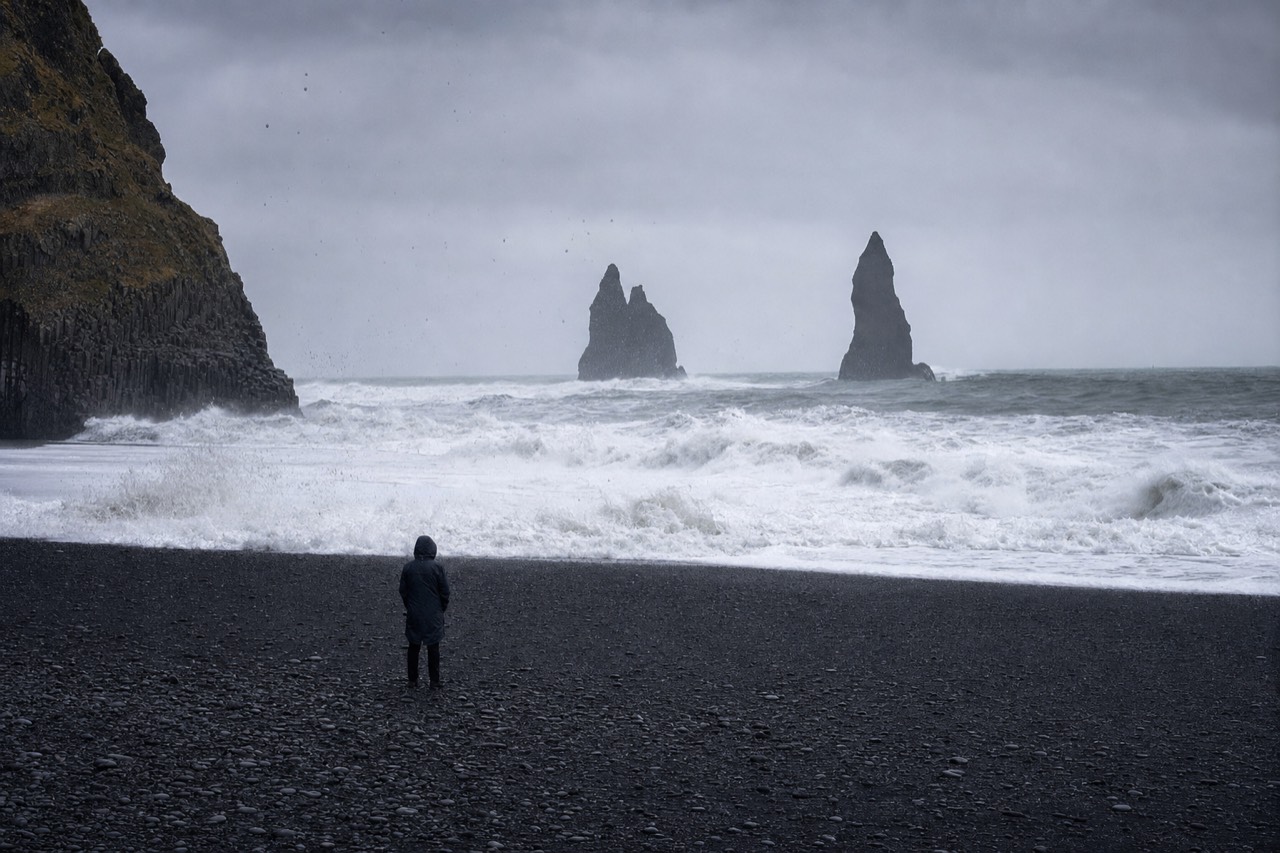
This is the one that has killed. Reynisfjara's waves do not behave like a normal beach. Most run up the sand a predictable distance, and then, without any build-up you can see, one comes in two or three times farther, fast and nearly silent. That is a sneaker wave. The water is freezing, the beach shelves steeply into a strong undertow, and a person knocked off their feet can be pulled out in seconds.
Visitors have died here. I state that plainly because softening it does not help anyone. The pattern is almost always the same: someone walks down toward the water for a photo, with their back to the sea, and gets caught. Current access is restricted to the designated viewpoint. Follow closures and instructions from safety officers; a previous wet line does not establish a safe boundary. Never turn your back on the ocean. Keep children within arm's reach. If a wave is running toward you, move away from it immediately, do not stop to save a phone or a hat.
How dangerous is the wind on the South Coast?
Strong enough to rip a car door out of your hand and knock an adult down, with gusts that can top 25 metres per second.
People underestimate Icelandic wind because they have never felt wind like it. Gusts on the South Coast can exceed 25 metres per second, and at that strength the wind will rip a car door clean out of your hand and bend it back on its hinges. Rental insurance often excludes this exact damage, and every season it costs visitors real money.
The same wind can knock an adult off their feet, blast grit into your eyes, and make cliff edges and slick paths genuinely dangerous. Open car doors on the sheltered side and hold them hard. When the wind is up, stay away from edges and be ready for waterfall paths and viewpoints to close.
How fast do the weather, rivers and roads change?
Fast enough that you check conditions the morning you travel, not the night before, and treat glacial rivers as off-limits in a normal car.
The weather turns on a schedule of its own, and two websites are the ones locals actually use. Vedur.is gives the official forecast, wind and warnings; road.is shows live road conditions and closures. Check both the morning you travel, not the night before.
Rivers matter if you leave the main road. Glacial rivers rise through the day as the ice melts and after rain, and fording them in a standard car is a known way to write off a vehicle and put yourself in cold, fast water. Unless you are in a proper vehicle and know exactly what you are doing, do not attempt river crossings. On Route 1 itself in winter, ice and crosswind are the hazards; be willing to turn back if conditions close in.
Can you safely walk on the glaciers yourself?
No: glaciers hide crevasses under thin snow bridges, so you step onto the ice only on a guided, roped trip with crampons.
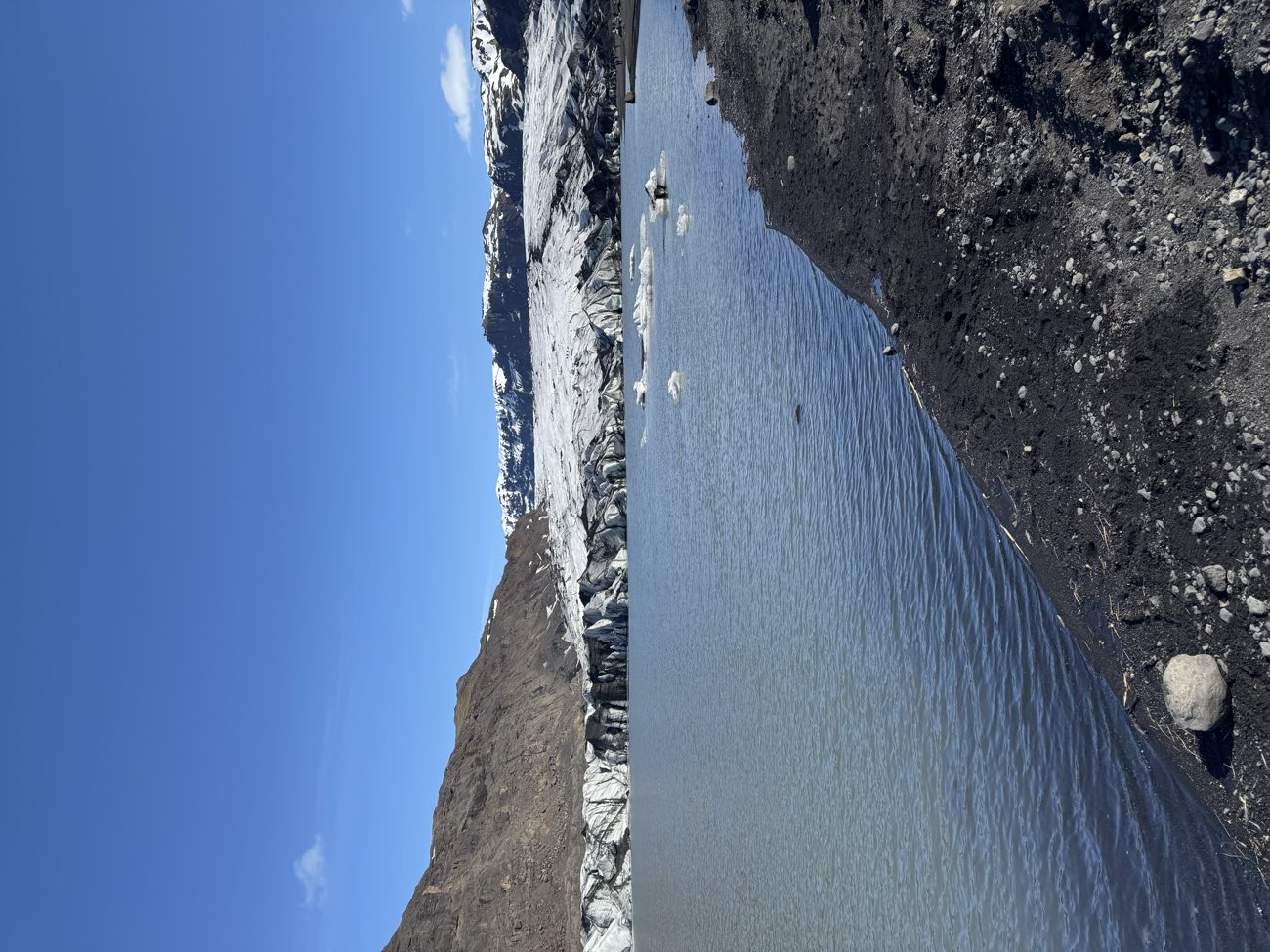
Solheimajokull and the other glacier tongues look like solid, walkable ice from the viewpoint. They are not. Glaciers are riddled with crevasses, some hidden under thin snow bridges, and the surface near the snout is unstable. People have fallen into crevasses walking onto ice unroped.
A glacier ice-walk is a genuinely great experience, but only as a guided activity with crampons, a rope and someone who reads the ice. From a normal South Coast day you look at the glacier from the marked viewpoint. You do not step onto it. The same rule holds for the Katla ice cave near Vik: it can only be entered with a certified guide who checks the ice, on a super-jeep tour you book on its own rather than as part of the day trip.
What are the main hazards, and how do you avoid them?
The big ones are sneaker waves, high wind, sudden weather, river crossings, winter roads and crevasses, and each has a clear precaution.
| Hazard | Where | How to avoid it |
|---|---|---|
| Sneaker waves | Reynisfjara black beach | Remain in the designated viewpoint, obey closures and keep children close |
| High wind | Whole coast, exposed stops | Open car doors carefully and hold them; avoid edges; expect closures |
| Fast-changing weather | Everywhere | Check vedur.is and road.is the morning of; dress for all conditions |
| Glacial river crossings | Off the main road | Do not attempt in a standard car; rivers rise through the day |
| Winter Route 1 | The drive itself | Right vehicle, check road.is, be willing to turn back |
| Crevasses on glaciers | Solheimajokull and other ice | Look only from the viewpoint; walk on ice only on a guided, roped trip |
Where does a guide genuinely lower the risk?
On the judgement calls under changing conditions, which is exactly where someone who runs the route daily earns their place.
I am not against self-driving; I do it constantly in summer. But most of the hazards above come down to judgement calls under changing conditions, and that is exactly what a guide who runs the route daily is good at. The guided South Coast day trip from Reykjavik provides guided transport and planned sightseeing stops, subject to weather and access restrictions. Food and drinks are extra. For a first visit or a winter trip, that can remove the need to drive this route yourself.
The South Coast rewards respect and punishes complacency, and the gap between a brilliant day and a bad one is usually just a few decisions made calmly instead of carelessly. Read the water, read the wind, and do not let a photo talk you somewhere the sea can reach.
What is the short version?
Respect beach closures, handle wind and car doors carefully, check vedur.is and road.is, never ford rivers, and walk on ice only with a guide.
Reynisfjara's sneaker waves have killed people, so remain in the designated viewpoint and follow closures. Icelandic wind can tear off car doors and knock you down, so handle doors and edges carefully. Check vedur.is and road.is the morning you go, never ford glacial rivers in a normal car, and only walk on glacier ice with a guided, roped trip. Respect the coast and it is generous.
Choose Your Visit
Initial editorial recommendation. Check pickup and all operator requirements before booking.
Compare Options And Adjust Your Plan
- Iceland's South Coast Full Day Small-Group Tour from Reykjavik: Visit the South Coast waterfalls and the Reynisfjara area in a group of up to 18. 10 hours. Departs from and returns to Reykjavík. Follow current closures: sand, columns and cave access are not guaranteed. Confirm your pickup point.
- South Coast Day Tour Black Sand Beach & Waterfalls from Reykjavik: Combine the South Coast waterfalls and the Reynisfjara area on a shared coach itinerary. 10 hours. Departs from and returns to Reykjavík. Follow current closures: sand, columns and cave access are not guaranteed. Confirm your pickup point.
- Solheimajokull Glacier 4-Hour Small-Group Hike: Explore Sólheimajökull on a separate guided hike with glacier equipment provided. 4 hours. Meet at Sólheimajökull; arrange your own travel. Ages 8+. Moderate fitness and hiking footwear required. No Reykjavík transfer.
Iceland's South Coast Full Day Small-Group Tour from Reykjavik
Have your day in mind? Check the departure and pickup details before arranging the rest of your route.
10 hours. Departs from and returns to Reykjavík. Guide; Minibus transport; Reykjavík pickup. Meals and drinks cost extra.
Follow current closures: sand, columns and cave access are not guaranteed. Confirm your pickup point.
Choose your date on Viator while the schedule loads.
Scheduled departures only. Availability and final price are confirmed on Viator.