Why can't you swim at Reynisfjara?
The straight answer on why this beach is one of the most dangerous in Iceland, and the simple rules that keep you out of trouble.
 Written with Björn Einarsson, Iceland South Coast tour guide and local specialist
The short answer
You cannot swim at Reynisfjara because it has powerful sneaker waves that surge far up the beach without warning, a strong undertow that drags people out, and water cold enough to cause rapid cold-water shock. People have been killed here. There are no lifeguards and no safe swimming area, so the rule is simple: stay well back from the waterline and never turn your back on the sea.
For a separate activity from Vik, check the Katla outing before filling the rest of your day. It is for ages 8+ and requires your own travel to the meeting point. Check the Katla outing from Vik
Access changes with conditions. Follow current signs and closures; beach tours do not guarantee access to the sand, basalt columns or sea cave.
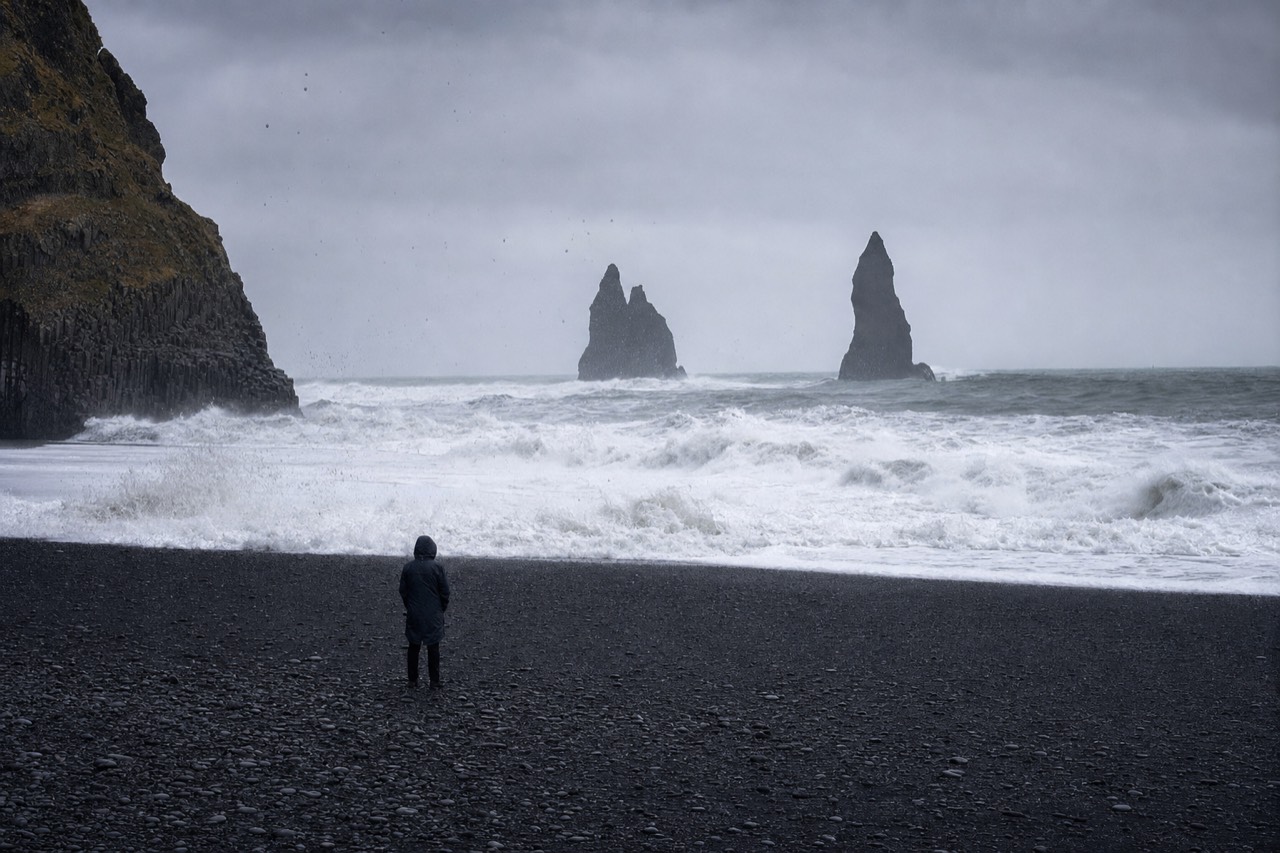
Reynisfjara looks like a beach where you would paddle. It is not. The Atlantic here does something that catches even careful visitors off guard, and visitors have been swept out to sea. This is not a beach with a strong current you should respect. It is a beach where the water itself can reach up, take hold and pull, and where the safe move is to keep your distance from the start.
Interested in the volcanic landscape beyond the shoreline? Discover a separate three-hour Katla ice-cave outing from Vik, with a super-jeep ride and glacier guide. Discover the Katla ice-cave outing
Sneaker waves: the real killer
The main danger has a name. Sneaker waves are unusually large waves that push far higher up the sand than the ones before them, with no visible build-up. One minute the surf is breaking thirty metres away. The next, a surge races up the slope and washes around your knees, then your waist. Because the beach shelves steeply and the sand is loose, it is hard to run back in time, and the retreating water pulls hard at your legs.
These waves arrive out of rhythm, which is exactly why they are dangerous. You cannot time them by watching one or two sets. Walking along the waterline for a photo, or standing with your back to the sea, adds avoidable exposure. Deaths at Reynisfjara are on record and are a documented reason the site is treated as high-risk. That is a fact, not a scare tactic, and it is the reason every guide repeats the same warning.
Cold water and undertow
Even if a wave did not knock you down, the water would work against you. The North Atlantic here stays cold all year, cold enough to trigger cold-water shock: an involuntary gasp and a spike in breathing rate that can pull water into the lungs within seconds. On top of that, the backwash and undertow drag seaward with real force as each wave retreats, so anyone swept off their feet is moving away from the shore, not toward it.
Put the three together and the picture is clear. There is no lifeguard, no roped swimming zone, no safe window. The reasons stack up rather than cancel out.
| Hazard | What it does | Why it is deadly here |
|---|---|---|
| Sneaker waves | Surge far up the beach without warning | Arrive out of rhythm, impossible to time |
| Undertow / backwash | Pulls seaward as the wave retreats | Drags a fallen person away from shore |
| Cold-water shock | Involuntary gasp, breathing spikes | Water is cold year-round, reaction is instant |
| No lifeguards | No one watching or able to reach you fast | Rescue from this surf is extremely hard |
How to stay safe on the black sand
Follow the current access restrictions, not the colour of the sand. SafeTravel reported viewpoint-only access on 25 September 2026. Stay within the permitted viewing area and well back from the water; dry sand is not proof that a wave cannot reach it. Never turn your back on the ocean, especially for a photo. Keep children and anyone unsteady close and away from the water. If you see other people wading in or standing on the wet sand, do not copy them.
A tour does not establish a safe line on the sand or override closures. Check current instructions before the stop and obey local safety officers.
The 2026 storms changed the texture of the sand, but they did not soften the sea. If anything, a coarser, more uneven beach makes footing trickier. The one part of Reynisfjara that has never changed is the danger of the water.
What does the warning-light system actually mean?
Reynisfjara uses three warning levels: yellow, orange and red. There is no green clearance level. The warnings describe wave danger, and closures or local instructions can impose stricter limits.
| Colour | Official meaning | What it means for you |
|---|---|---|
| Yellow | Moderate hazard | Remain alert and follow all restrictions |
| Orange | Considerable hazard | Stay well away from water; SafeTravel specifies at least 25 metres |
| Red | Severe hazard | The beach is closed; use only the designated viewing area |
A warning below red does not establish that the beach is open. On 25 September 2026, SafeTravel’s current notice specified viewpoint-only access even without a red alert. That restriction takes precedence over the general colour table.
Check the signs before proceeding, follow barriers and local officers, and never infer safety from calm-looking water. Conditions can change quickly. A guided group follows the same restrictions as an independent visitor.
Why do sneaker waves catch even careful visitors off guard?
Sneaker waves catch careful people because there is no reliable warning: they arrive in irregular large sets rather than a steady rhythm, so watching a few waves break tells you nothing about the one after them, and a photo or a moment with your back to the sea can distract you from the danger. Human attention is not built for this kind of risk. We are good at reacting to things we can see coming and bad at maintaining vigilance against something that might not happen for another ten or fifteen minutes, and then does.
Photography makes the problem worse, not better. Getting the shot usually means looking through a screen or a viewfinder rather than at the water, and framing a good picture of the sea naturally pulls people a few steps closer to it than they meant to go. Groups add a second layer of risk: someone calling out or waving for attention can make a person glance away from the surf at exactly the wrong moment. None of this requires carelessness in the everyday sense. It requires a few ordinary seconds of not watching the water, which is exactly what a sneaker wave is built to exploit.
| Common moment of distraction | Why it raises the risk |
|---|---|
| Framing a photo or video of the waves | Attention goes to the screen, not the surf |
| Turning to talk to someone in the group | Back is briefly to the sea |
| Standing on wet sand to get a closer shot | Already inside the zone the waves reach |
| Watching a child or pet near the shoreline | Focus splits, reaction time drops |
| Assuming a calm-looking sea means a calm wave | Sneaker waves do not announce themselves |
The pattern across all five is the same: follow the permitted viewing boundary and stay well back from the water instead of trying to predict a wave.
There is also a group-size effect worth naming honestly. On a quiet beach, one person standing too close to the water is easy for everyone nearby to notice and call out. On a busier day, especially with a coach load of visitors spread across the sand, a single person a few steps too close can slip past without anyone else clocking it in time, simply because there is more happening at once. That is not a reason to avoid busier times at the beach. It is a reason the distance rule matters more, not less, when there are more people around, since the crowd itself cannot substitute for your own attention to where your feet are.
Locals and guides who spend real time on this stretch of coast describe the same pattern again and again: the moments that go wrong are rarely dramatic in the lead-up. Nobody sets out to get too close. It is a photo that needed one more step, a wave that looked smaller than the ones before it, or a few seconds spent checking a phone at the wrong point in the tide. None of that makes the outcome any less serious, which is exactly why the standard advice never softens into "usually fine if you're careful." Staying back and respecting access restrictions reduce exposure; they are not a guarantee against every coastal hazard.
If you want to be near black-sand terrain safely, what are the alternatives?
Choose a separate volcanic-landscape activity instead of approaching Reynisfjara’s surf. A guided ATV ride near Myrdalur and the Katla ice-cave outing from Vik offer different experiences, each with its own hazards and participation requirements. Neither is a guarantee of safety or a way around beach closures.
| Activity | What is included | Important difference |
|---|---|---|
| Black lava-sand ATV ride near Myrdalur | Guided two-hour ride, helmet and insulated coverall | Drivers need a valid licence; arrive at the base yourself |
| Katla ice-cave outing from Vik | Three-hour outing, super-jeep ride, glacier guide, helmet and crampons | Ages 8+; meet in Vik; meals and Reykjavik transfers excluded |
The quad bike route begins near Myrdalur off Road 222. Riding conditions and the operator’s instructions matter; the booking does not promise a route free of coastal hazards.
Katla is a natural ice-cave experience on Kötlujökull, separate from the sea cave at Reynisfjara. The trip leaves from Vik and provides the equipment listed above. Bring warm waterproof clothing and suitable hiking footwear. Natural conditions can change the outing; confirm the departure and requirements before booking.
The one instruction Bjorn repeats on every stop
Bjorn's single instruction, repeated on every South Coast departure regardless of the day's warning colour, is simple: never turn your back on the ocean, remain within the permitted viewing area, check the warning lights and closures before proceeding, and keep an eye on children or anyone unsteady on their feet. Guiding this stretch of coast since 2022, he treats that line less as a rule to recite once and more as something to repeat at the moment it actually matters, right as a group steps off the bus.
The reasoning behind it is exactly what this guide has laid out: the danger is not constant vigilance against an obvious threat, it is a short lapse in attention against a wave that gives no warning. He would rather say the same three things every single stop than assume a group remembers them from a briefing given an hour earlier at Skogafoss.
He also tells visitors, gently, that the instinct to relax the rule a little because the sea "looks calm" is exactly the instinct to override. A quiet-looking sea is not the same thing as a safe one at Reynisfjara, and the whole point of repeating the instruction every stop, rather than trusting people to remember it, is that a calm day is precisely when attention tends to drift.
It is a short instruction on purpose. A long safety briefing is easy to forget within a few minutes, especially for visitors juggling cameras, layers and a new environment all at once. Three plain rules, repeated at the exact moment they matter rather than buried in a longer talk back on the coach, are far more likely to actually stick. That is the whole design behind it: not a rulebook, just the handful of words someone needs in their head before they enter the permitted viewing area. It is a small habit repeated often, but it reinforces the access instructions at a coast with both wave and rockfall hazards.
What should you do if you see someone too close to the water?
If you see someone standing too close to the water or on the wet sand, call out to them clearly and encourage them back to the permitted viewing area without approaching the water yourself. Never go into the water after someone yourself, since the same wave and undertow that put them at risk will do exactly the same to you, and instead call 112 immediately if someone is in danger, and alert nearby staff from a safe position. This is standard water-safety advice used at hazardous coastlines everywhere, not something specific to Reynisfjara, but it applies here with particular force given how fast conditions change.
The instinct to physically pull someone back is understandable and, in the first few seconds, usually the wrong move if it means stepping into the same danger zone yourself. A second person in trouble does not help the first. The more useful response is a loud, clear call that gets their attention and gets them moving on their own, while avoiding a second person entering the hazard zone.
If you are traveling with a guide, alert them while emergency help is called; do not assume that any tour guide is trained or equipped for a surf rescue. If you are self-driving and alone, the same rule holds: shout, point, get attention on the water, and do not close the distance yourself.
| Safe response | Unsafe response |
|---|---|
| Call out loudly to get their attention | Wading in after them yourself |
| Point at the wave or the water, not just at them | Assuming someone else nearby will act first |
| Get a guide or nearby staff involved fast | Waiting to see if the situation resolves on its own |
| Step back yourself while you call out | Moving closer to help, even a few steps |
| Who tends to get caught out | Why |
|---|---|
| Photographers backing up for a wider shot | Attention on the screen, not the surf |
| First-time visitors unfamiliar with sneaker waves | No reference for how far the water can reach |
| Anyone distracted by a group or a conversation | A few seconds with their back to the sea is enough |
| People assuming a calm-looking sea means low risk | Sneaker waves do not depend on how the sea looks |
None of this replaces the basic rule that applies to you directly: stay back from the water in the first place, and the question of what to do if someone else does not follow that rule becomes far less likely to come up at all.
Common questions
Has anyone died at Reynisfjara?
Yes. Sneaker waves at Reynisfjara have killed visitors, which is why it is treated as one of the most dangerous beaches in Iceland. The waves surge far up the beach without warning and the cold water and undertow make rescue very hard. Stay well back from the waterline at all times.
Can you go in the water at all at Reynisfjara?
No. There is no safe depth and no swimming area. Even standing on the wet sand near the surf is risky because sneaker waves reach much higher than the normal wave line. Remain within the permitted viewing area and follow all closures; dry sand is not a safety boundary.
What is a sneaker wave?
A sneaker wave is an unusually large wave that rushes far higher up the beach than the waves before it, with no visible warning. At Reynisfjara they arrive out of rhythm, so you cannot predict them by watching the surf, and the backwash drags hard as they retreat.
Is it safe to visit Reynisfjara if you don't swim?
Not swimming does not remove the wave and rockfall hazards. Visit only the area currently permitted, follow closures and stay well back from the sea. SafeTravel reported viewpoint-only access on 25 September 2026; a guide does not guarantee safe access.
Choose Your Visit
Initial editorial recommendation. Check pickup and all operator requirements before booking.
Compare Options And Adjust Your Plan
- Ice Cave by Katla Volcano Super Jeep Tour from Vik: Travel by Super Jeep from Vík for a guided Katla ice-cave visit with glacier equipment. 3 hours. Meet in Vík and return there; arrange your own travel. Meeting section says Vikinn Hotel lobby, itinerary says Icelandic Lava Show: booking instructions must resolve exact meeting point. Ages 8+. Arrange your own travel to Vík; confirm the exact meeting point on your voucher. Cave appearance can change.
Ice Cave by Katla Volcano Super Jeep Tour from Vik
Planning a separate volcanic-ice adventure from Vik? Check the Katla date and meeting details before arranging the rest of your day.
3 hours. Meet in Vík and return there; arrange your own travel. Meeting section says Vikinn Hotel lobby, itinerary says Icelandic Lava Show: booking instructions must resolve exact meeting point. Super Jeep ride; Ice cave visit; Certified glacier guide; Helmet and crampons.
Ages 8+. Arrange your own travel to Vík; confirm the exact meeting point on your voucher. Cave appearance can change.
Choose your date on Viator while the schedule loads.
Scheduled departures only. Availability and final price are confirmed on Viator.