Is Reynisfjara worth visiting?
An honest verdict after the erosion, what the beach delivers now, and the few people who might reasonably give it a miss.
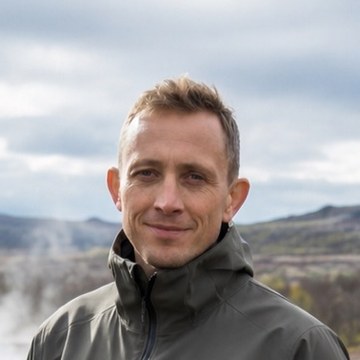 Written with Björn Einarsson, Iceland South Coast tour guide and local specialist
The short answer
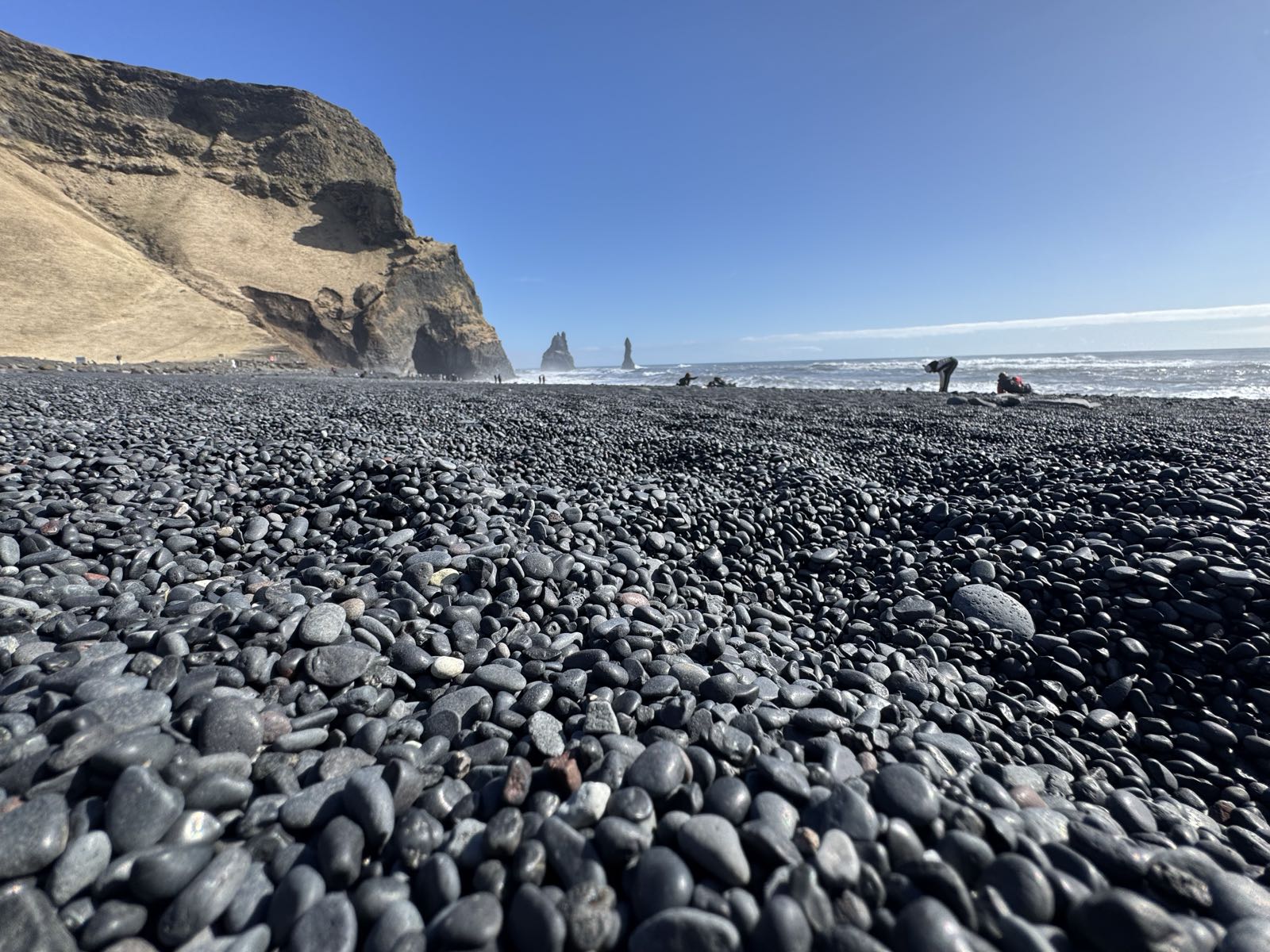
Yes, Reynisfjara is still worth visiting. The 2026 storms and slope collapse stripped some of the fine black sand, but the features that make it famous, the basalt columns, the sea cave and the towering Reynisdrangar sea stacks, are geology and are unchanged. It is coarser underfoot than the old postcard photos, yet visitors keep rating it as a South Coast highlight. If you expect powder-perfect sand you may feel let down, but for the raw drama of the place it delivers.
The Reykjavík minibus route lists a 30-minute beach stop within a 10-hour day, so you can combine Reynisfjara with the wider South Coast. Check your South Coast date
Access update, September 25, 2026: SafeTravel reports viewpoint-only access during current stormy weather and high waves. Follow current warnings and closures; a tour booking does not grant access to restricted beach areas.
If you have seen the "the beach is ruined" posts, you are probably wondering whether Reynisfjara still earns a place on a tight Iceland itinerary. The short answer is yes, and it is not a reluctant yes. What changed in 2026 was the sand, not the scenery that made this one of the most photographed beaches on Earth.
If the coast earns a place on your itinerary, explore a minibus day that pairs Reynisfjara with waterfalls and a glacier viewpoint. Explore the South Coast minibus route
What you actually get now
Reynisfjara's headline features are made of rock, and rock does not wash away in a storm. The Gardar basalt columns still rise in their sharp hexagonal steps at the base of the cliff, distinctive geological formations to view from permitted areas; do not climb the columns. The Halsanefshellir sea cave is still cut into the columned wall. Offshore, the Reynisdrangar sea stacks still stand roughly 66 metres out of the water, the jagged points that legend calls trolls caught by the sunrise.
The beach itself is black, dramatic and set against an ocean that never sits still. The difference from the classic photos is texture: more coarse sand and pebble in places, less of the fine powder that made drone shots look like spilled ink. It is a change you notice underfoot, not one that flattens the view.
| What you came for | State in 2026 | Verdict |
|---|---|---|
| Basalt columns (Gardar) | Unchanged | View only from areas currently open |
| Reynisdrangar sea stacks | Unchanged | Still tower offshore |
| Halsanefshellir sea cave | Still there, check access on the day | Observe closures and falling-rock warnings |
| Fine powder-black sand | Patchier, coarser in places | The one real downgrade |
| Overall drama | Intact | Still otherworldly |
Who might skip it
A few travellers can reasonably pass. If your whole reason for coming was a specific powder-sand photo you saw years ago, the current beach may not match it, and you will be happier setting expectations first. If you are extremely tight on time and have to choose between stops, someone chasing waterfalls or glaciers might prioritise those. And anyone unwilling to respect the water should know the sea here is genuinely dangerous, so the reasons you cannot swim at Reynisfjara are not optional reading.
For nearly everyone else, it stays on the list.
How to see it at its best
Reynisfjara rewards a bit of planning. Softer light early or late in the day suits the black sand and the stacks, and the beach is quieter outside the mid-morning to early-afternoon coach rush. Because it sits about 180 km and roughly two and a half hours from Reykjavik, most visitors fold it into a full day along the South Coast rather than driving out for the beach alone.
That is where a tour earns its keep. A guided South Coast day trip combines the planned Reynisfjara stop with waterfalls and a glacier viewpoint, taking the driving off your hands while remaining subject to conditions. Check the operator’s cancellation deadline before booking; a poor forecast can arrive after that deadline.
The verdict holds: coarser sand, same awe. Reynisfjara is still one of the best stops on Iceland's South Coast.
How does Reynisfjara compare to Iceland's other famous landscapes?
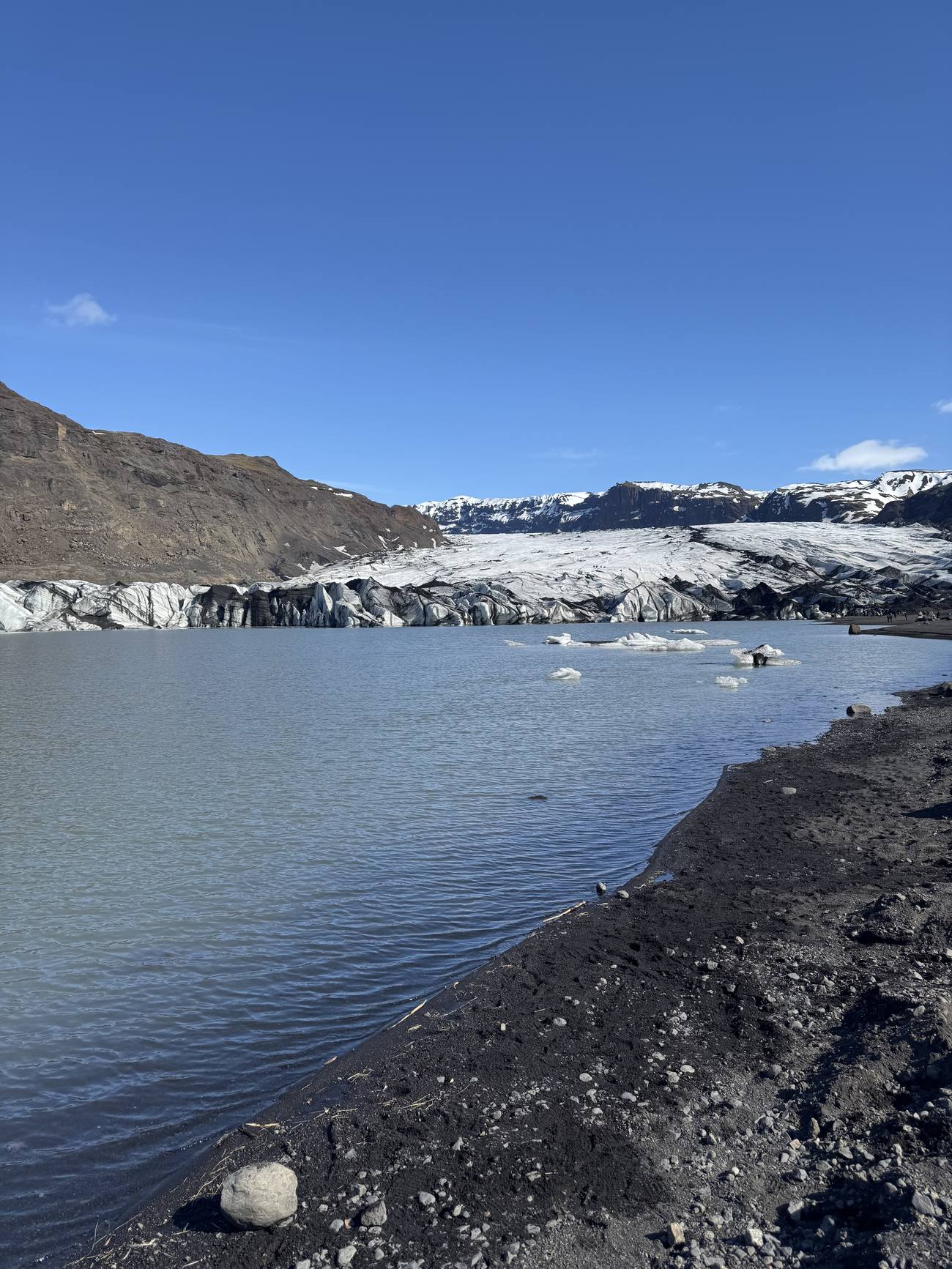
Reynisfjara, the Solheimajokull glacier and the Katla ice cave are not competing for the same slot on your itinerary: the beach gives you black sand, basalt columns and sea stacks against open ocean, the glacier gives you the scale and texture of real ice-cap ice, and the cave gives you an enclosed, otherworldly blue-and-black world underground. None of the three is a "better" version of the others. They are different kinds of drama, and most South Coast trips can reasonably fit more than one, which is exactly why they tend to get grouped together rather than treated as alternatives.
It helps to think about what each one actually asks of you as a visitor, since that is often what decides which combination fits a given trip. Reynisfjara is a short, high-impact stop: dramatic scenery you can take in in half an hour, with a hard safety rule attached to how close you get to the water. The separate glacier walk asks for more: proper footwear, four hours plus travel, and a guided activity with crampons, helmet and harness supplied. The ice cave asks for something in between, a super jeep ride and a walk underground, with its own equipment and its own guide, with an approach through exposed terrain before reaching the cave.
| Experience | What it delivers | Setting |
|---|---|---|
| Reynisfjara black sand beach | Basalt columns, sea stacks, black shore against the Atlantic | Open coastline, part of the main day tour |
| Solheimajokull glacier walk | Real ice-cap ice underfoot, with a certified guide and supplied glacier equipment | Exposed glacier tongue near Vik |
| Katla ice cave | Enclosed volcanic-ice cave, bookable year-round | Underground, reached by super jeep from Vik |
Seen this way, the question is less "which one is worth it" and more "which combination fits your trip." A traveler with one day on the South Coast gets Reynisfjara and a glacier viewpoint built into the same tour already, since both are stops on the same route. Someone with a bit more time, a stronger budget for extras, or a strong pull toward one kind of landscape over another can add the glacier walk or the ice cave as a separate booking, arranging it separately within a multi-day itinerary without having to choose one over the other.
If you can only pick one add-on beyond the beach itself, the honest way to decide is by what kind of physical experience appeals to you more: standing on moving ice with crampons and a rope, or walking into a still, silent cave carved into a glacier. Both are guided, both are safety-equipped, and neither one makes the other redundant, since the beach itself is not competing with either. It is simply the free, open-air anchor that the rest of the day builds around.
Is one visit enough, or should you come back?
For most people, yes, one visit is enough: the selected guided day tour lists roughly 30 minutes at Reynisfjara, with the actual viewing areas determined by current access restrictions, and that is genuinely sufficient if photography and simply seeing the place, rather than lingering there, are your goal for the trip. If what you actually want is a slow, quiet walk with no group pace to match, a second visit, timed for early morning or evening light and done at your own speed, is a different and legitimately better experience for that specific goal, though it asks more of you logistically.
| Visit style | Best fit for | Trade-off |
|---|---|---|
| One guided stop, about 30 minutes | Photos, first-time visitors, tight itineraries | Set pace, no flexibility on timing |
| Early or late self-drive visit | Photographers, travelers who value quiet over convenience | You handle Route 1, parking and timing yourself |
| Two visits on one trip | Travelers who want both convenience and a slower look | Extra time and, if self-driving, extra driving |
If a slower, self-guided visit appeals to you, the honest planning question is whether you are comfortable driving Route 1 yourself and reading the conditions on your own; the guide to visiting Reynisfjara without a tour walks through exactly that trade-off, including what you give up and gain compared with the coach. For everyone else, one well-timed guided stop does the job it needs to do, and a second dedicated trip back to the same 30-minute stretch of coast is not something most visitors end up wishing they had booked.
The honest middle ground, for travelers torn between the two, is to let the tour handle the logistics on this trip and treat "coming back for a slower visit" as an option for a future one, rather than something to force into an already full itinerary. Reynisfjara is not going anywhere, and neither is the option to see it differently next time.
There is also a practical reason the 30-minute stop works as well as it does for most people. A guided visit compresses the parts that eat time on a self-drive trip, parking, orienting yourself, reviewing permitted access, into a guided stop; current warnings and closures still govern where visitors can go. That efficiency is exactly what a first visit needs. A slower, self-timed return trip is a better fit once you already know the layout and just want to stand there longer, which is a different problem to solve than seeing the place for the first time.
What do first-time visitors get wrong about it?
The three most common mismatches are expecting a beach you can wade into, expecting the deep, powder-fine sand from pre-2026 photos everywhere underfoot, and underestimating how hard the wind can blow off the open Atlantic on an exposed stretch of coast. None of these are dealbreakers once you know about them ahead of time; they only trip people up when the beach in front of you does not match the picture that was already in your head.
| Expectation | Reality |
|---|---|
| "It's a beach, I can get in the water" | No safe swimming, ever: sneaker waves are lethal here |
| "The sand will look like the old drone photos everywhere" | Patchier and coarser in places since the 2026 storms, still black and dramatic |
| "It's just windy, like anywhere coastal" | Wind off the open Atlantic can be strong enough to affect footing and photography |
The swimming misunderstanding is the most consequential of the three, since it touches on real safety rather than just expectations, and it is worth repeating plainly here: there is no safe way to get in the water at Reynisfjara, at any time of year, regardless of how it looks that day. The sand texture mismatch is mostly a photography and mood issue, easily fixed by adjusting what you expect before you arrive rather than being caught off guard once you are standing there. The wind is the one people plan for least and notice most, since it affects everything from holding a phone steady to how comfortable the visit feels, especially for anyone not dressed for an exposed coastline.
None of these three mismatches are reasons to skip the visit. They are reasons to arrive with the right picture already in your head, which is really the entire point of this guide. A visitor who knows the water is off-limits, expects a coarser beach than the old photos and packs a real jacket has a genuinely better experience than one who shows up expecting something closer to a Caribbean postcard.
There is a fourth, smaller mismatch worth naming too: people expect the visit to feel like a beach day, relaxed and unhurried, when in practice most visitors experience it as a brisk, striking stop rather than a place to linger for hours. That is not a flaw in the place. It is simply a different kind of experience than "beach" usually implies, closer to visiting a dramatic natural monument than spending an afternoon by the water. Adjusting that expectation, along with the other three, tends to be the difference between visitors who leave a little underwhelmed and visitors who leave talking about it for the rest of the trip.
What makes Bjorn keep bringing visitors back here
Bjorn has guided the South Coast, including Reynisfjara, since 2022, and by his own account the reaction has stayed remarkably consistent across hundreds of stops: visitors who arrive expecting "just a beach" are reliably stopped short by the scale of the columns and the stacks once they are actually standing there. He does not operate this bookable tour himself, and does not claim to; his view comes from years of watching the same moment happen, trip after trip, at the same short stop on the same stretch of coast.
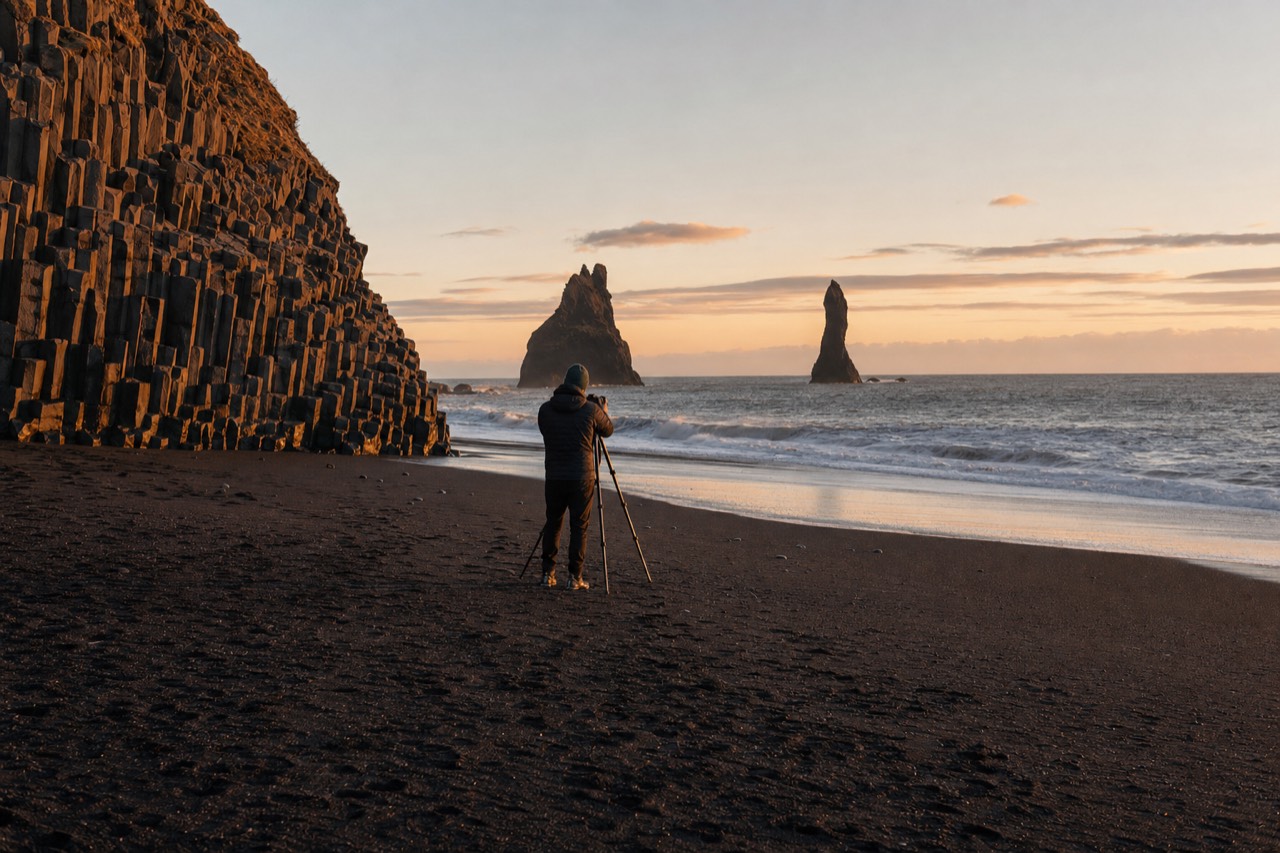
What he keeps coming back to, in his own words, is less about the sand and more about the composition: black rock, white surf and grey sky work together at Reynisfjara in a way that photographs well in almost any weather, which is unusual for a coastal stop. He has watched the same reaction hold through calm summer afternoons and rougher winter storm days alike, which is part of why the 2026 sand changes did not shift his own sense of the place much: the elements that make the composition work were never about the sand in the first place.
Whether that holds for you personally is not something he or this site can promise. It is simply the honest, research-and-verification-grounded read of someone who has watched the place work on visitors, season after season, for years, verifying conditions each time against safetravel.is and the operator's own listing before a group ever steps off the coach.
Ask him what changed about his own view of Reynisfjara after February 2026 and the answer is, essentially, nothing structural. He adjusted what he tells visitors about footing and sand texture, the same practical shift covered elsewhere on this site, but the reason he keeps bringing people here has never been about the sand being perfect. It has always been the columns, the stacks and the sheer scale of the ocean against the rock, and none of that moved.
What do people say after they've actually been?
Visitors keep describing Reynisfjara as one of the standout stops on the South Coast route, even in the months since the 2026 changes, with the reaction shifting from expecting a beach to being struck by the scale of the columns and the stacks. Read recent reviews of the specific tour you are considering, while remembering that a whole-route rating does not isolate the beach experience. Look for comments that describe the beach stop, timing and conditions rather than relying only on the overall tour score.
Guides on this route report a version of the same pattern from their own vantage point: visitors arrive having seen the "beach is ruined" headlines and leave describing the stop as one of the best parts of the day, once they are actually standing in front of the columns and the stacks. That does not mean every single visitor loves it equally, or that the sand disappointment some people worry about beforehand never shows up at all. It means the pattern, at scale, leans strongly toward the place still delivering on what it promises.
Timing plays a real part in how strongly that reaction lands, and it is worth being deliberate about when you actually stand on the sand.
| Time of day | Why it's worth considering |
|---|---|
| Early morning | Fewer coach groups, softer light on the columns and stacks |
| Midday | Busiest window, most coach tours stop around this time |
| Late afternoon, golden hour | Warmer light, waves and spray catch the light well |
| After most tours have left | Quietest window if you are self-driving and timing it yourself |
Who the visit tends to land best for, and why, comes down to what you actually came for rather than the state of the sand alone.
| Traveler type | Is it worth it? |
|---|---|
| First-time visitor to Iceland | Yes, one of the most distinctive stops on the whole South Coast |
| Photographer chasing a specific old photo | Yes, but adjust expectations around the sand first |
| Extremely tight on time, choosing between stops | Still yes, the 30-minute stop is efficient relative to what it delivers |
| Traveler who cannot go near open water at all | Assess the visit against current warnings and your own comfort; sneaker waves can reach far beyond the apparent waterline |
Across all four rows, the pattern holds: the reaction people report after actually standing there consistently outruns the hesitation they had before they arrived.
Common questions
Is Reynisfjara still worth visiting after the 2026 erosion?
Yes. The storms stripped some fine sand and left more pebble in places, but the basalt columns, sea cave and Reynisdrangar sea stacks are unchanged. Visitors continue to rate it as a South Coast highlight. Just arrive expecting a coarser beach than older photos show.
How long do you need at Reynisfjara?
Around 30 minutes is enough to see the black sand, the basalt columns and the sea stacks and take photos while following current warnings and staying well away from the ocean. Guided tours typically stop for about that long. Photographers who want the best light may prefer to time a visit for early or late in the day.
What is there to see at Reynisfjara?
The main sights are the black sand beach itself, the Gardar basalt columns, the Halsanefshellir sea cave, and the Reynisdrangar sea stacks offshore. The beach also has strong film-location fame. It sits near the village of Vik on Iceland's South Coast.
Is Reynisfjara better than other Iceland beaches?
It is the most famous black sand beach in Iceland for good reason, thanks to the columns, cave and sea stacks in one place. Diamond Beach further east is different and also striking. Many South Coast day trips let you see Reynisfjara alongside major waterfalls, which is hard to beat for one day.
Choose Your Visit
Initial editorial recommendation. Check pickup and all operator requirements before booking.
Compare Options And Adjust Your Plan
- Iceland's South Coast Full Day Small-Group Tour from Reykjavik: Visit the South Coast waterfalls and the Reynisfjara area in a group of up to 18. 10 hours. Departs from and returns to Reykjavík. Follow current closures: sand, columns and cave access are not guaranteed. Confirm your pickup point.
- South Coast Day Tour Black Sand Beach & Waterfalls from Reykjavik: Combine the South Coast waterfalls and the Reynisfjara area on a shared coach itinerary. 10 hours. Departs from and returns to Reykjavík. Follow current closures: sand, columns and cave access are not guaranteed. Confirm your pickup point.
Iceland's South Coast Full Day Small-Group Tour from Reykjavik
Ready to include the coast in your stay? Check the Reykjavík departure for your date before setting aside the day for Reynisfjara, waterfalls and a glacier viewpoint.
10 hours. Departs from and returns to Reykjavík. Guide; Minibus transport; Reykjavík pickup. Meals and drinks cost extra.
Follow current closures: sand, columns and cave access are not guaranteed. Confirm your pickup point.
Choose your date on Viator while the schedule loads.
Scheduled departures only. Availability and final price are confirmed on Viator.