Puffins near Reynisfjara and Dyrhólaey
The black sand does not have puffins, but the headland next door does. Here is where the birds actually are and the window to catch them.
 Written with Björn Einarsson, Iceland South Coast tour guide and local specialist
The short answer
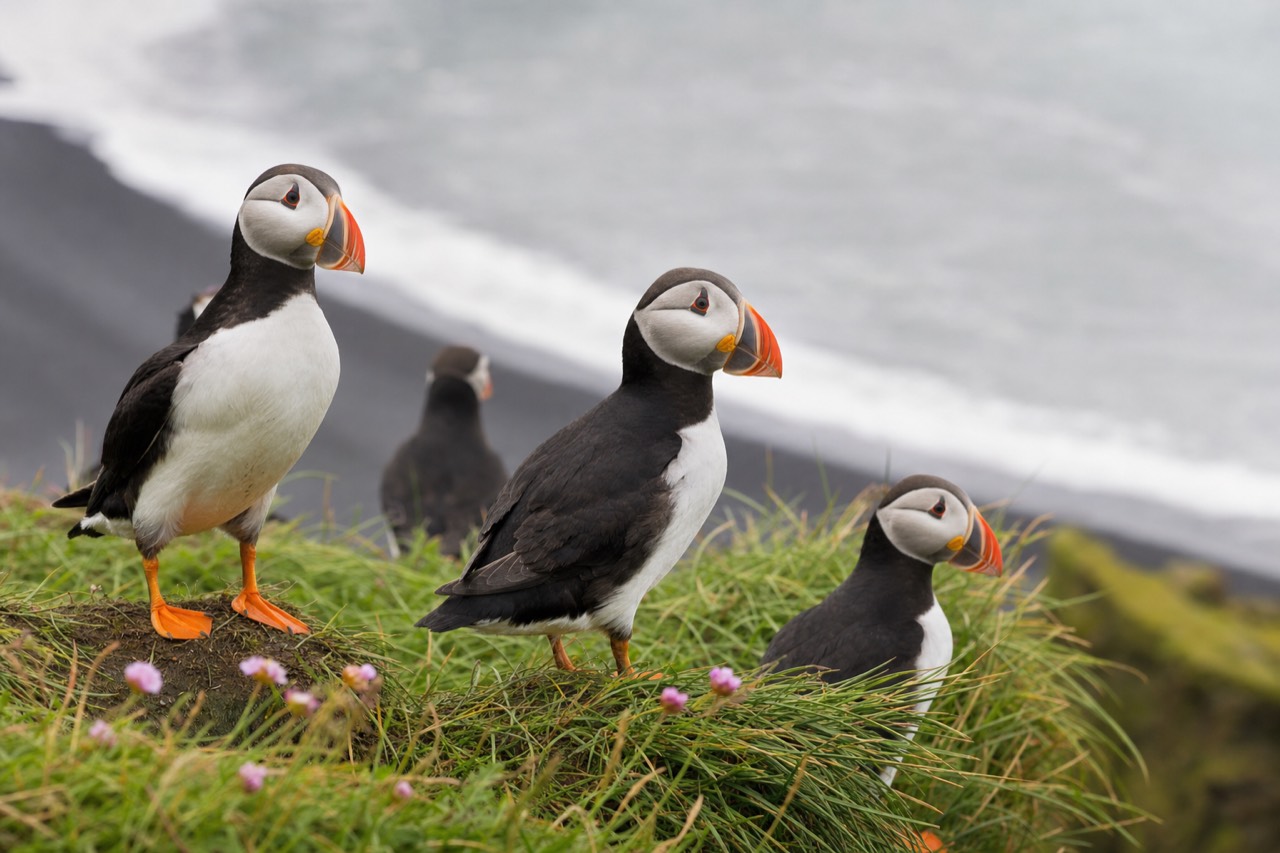
Puffins do not nest on Reynisfjara beach itself, but they do nest on the grassy cliffs of Dyrhólaey, a headland a few minutes' drive away, roughly from May to August. The best chance is on a clear evening in June or July, looking along the cliff edges rather than the sea. Bring binoculars, keep back from the crumbling edge, and do not expect them outside the summer nesting season, when the birds are far out at sea.
For arranged transport to the nesting habitat, check the private itinerary’s Dyrhólaey stop. It is a coastal sightseeing day, and puffin sightings are never guaranteed. Check the route to Dyrhólaey
Access update, September 25, 2026: SafeTravel reports viewpoint-only access at Reynisfjara during current stormy weather and high waves. Observe closures; booking a tour does not grant access to restricted areas.
People arrive at Reynisfjara scanning the black sand for puffins and leave puzzled. The birds are not on the beach. They are around the corner, up on the green cliffs of Dyrhólaey, and once you know that the whole thing makes sense.
Planning a summer coast-and-birds day? Explore the private route that actually includes Dyrhólaey, giving you a headland stop alongside the coastal scenery. Explore the Dyrhólaey summer route
Puffins are seabirds that spend most of the year out on the open Atlantic. They only come to land to breed, digging burrows into soft, grassy clifftops, and that is exactly what Dyrhólaey offers: a high promontory of turf and rock a short drive west of Reynisfjara. The colony gathers there through the warm months and then vanishes back to sea.
When puffins are actually there
The season is the whole game. Outside the nesting season, a coastal visit is unlikely to produce puffin sightings.
| Period | Puffin activity | Worth going for puffins? |
|---|---|---|
| May | Birds arriving, settling into burrows | Yes, early but building |
| June | Peak activity, pairs at burrows | Best window |
| July | Still busy, chicks being fed | Best window |
| August | Birds depart over the month; timing varies | Possible, especially earlier in the month |
| September to April | Generally away at sea; spring arrivals vary | Not a reliable nesting-season visit |
If puffins are a priority, aim for June or July, and favour the evening. The birds are often most active near their burrows in the calmer light of a summer evening, coming and going with fish. A bright, low-wind day beats a grey blustery one.
Where to look, and what to bring
At Dyrhólaey the puffins sit along the cliff edges and on grassy ledges, not down on the water in front of you. Walk the marked paths on the headland and look toward the turf and the drop-offs. They are small, and they blend in, so a pair of binoculars turns a distant speck into an obvious orange beak. A zoom lens does the same for photos.
Two things matter more than gear. First, the cliff edges here are steep, undercut and genuinely dangerous, so stay well back and on the paths. Second, keep your distance from the burrows and do not chase the birds. On the ground at Reynisfjara you will want to watch the sea instead, where the sneaker-wave danger is the real hazard.
Dyrhólaey is not included in every South Coast itinerary. A scheduled headland stop does not guarantee an evening visit or puffin sightings.
Managing expectations
Puffins are wild, seasonal and weather-dependent. Some evenings the cliffs are busy with them, some afternoons you will see only a handful, and outside roughly May to August sightings near the nesting cliffs are unlikely. Treat them as a summer bonus on top of the beach, the arch and the sea stacks, rather than a guaranteed headline, and you will not leave disappointed.
Common questions
Are there puffins at Reynisfjara beach?
Not on the beach itself. Puffins nest on the grassy cliffs at nearby Dyrhólaey, a few minutes' drive from Reynisfjara, roughly from May to August. From the black sand you will not normally see them, so head to the Dyrhólaey headland to look.
What is the best month to see puffins near Reynisfjara?
June and July are the peak, when the birds are active around their burrows at Dyrhólaey. May is early but promising and departure timing varies through August; most have left by September and spend winter at sea.
Do I need binoculars to see the puffins?
They help a lot. The puffins sit along cliff edges and grassy ledges rather than close to the path, so binoculars or a zoom lens turn a distant dot into a clear view. Keep back from the crumbling cliff edges while you look.
Can I see puffins and Reynisfjara on the same day?
Yes. Dyrhólaey and Reynisfjara are close together on the South Coast, so a guided day trip or a self-drive can cover both. In summer, combine permitted coastal viewpoints with a Dyrhólaey stop when it is open. An evening visit requires a schedule that specifically allows it.
Choose Your Visit
Initial editorial recommendation. Check pickup and all operator requirements before booking.
Compare Options And Adjust Your Plan
- South Iceland Tour of Waterfalls, Black Sand Beaches & Dyrholaey: Visit Dyrhólaey and Víkurfjara with private transport from Reykjavík. 8 hours. Reykjavík accommodation/harbor pickup and return Nesting and access closures apply. Puffin sightings are not guaranteed; no Reynisfjall hike or Yoda cave visit.
South Iceland Tour of Waterfalls, Black Sand Beaches & Dyrholaey
Have a summer Reykjavík date in mind? Check the private itinerary and pickup before arranging your coastal day around a possible Dyrhólaey sighting.
8 hours. Reykjavík accommodation/harbor pickup and return Private guided transport; Reykjavík pickup and drop-off.
Nesting and access closures apply. Puffin sightings are not guaranteed; no Reynisfjall hike or Yoda cave visit.
Choose your date on Viator while the schedule loads.
Scheduled departures only. Availability and final price are confirmed on Viator.